On 26-28 August 2017, ADB-UNSW will host a Judicial Colloquium on Commercial Law in Naypyidaw, Myanmar. The purpose of the Colloquium is to facilitate dialogue between judges and judicial officers of the High Courts, District Courts and the Union Supreme Court of Myanmar and judges from foreign jurisdictions including Singapore, Hong Kong, and the Federal Court of Australia. The Judicial Colloquium will provide a forum to share common challenges, experiences, and solutions relating to new and emerging areas of commercial law in Myanmar. It will also cover strategies and structures for managing commercial cases. The Judicial Colloquium will cover both the technical and procedural aspects of commercial litigation and discussions with judges from common law countries with extensive experience in adjudicating commercial law cases. This Judicial Colloquium is part of a broader project on Professional Legal Education by UNSW Law.
Electoral Complaints and Accountability in Indonesia: The Challenge of Resolving Electoral Disputes
On 22 August 2017, we will be holding a workshop on “Electoral Complaints and Accountability in Indonesia: The Challenge of Resolving Electoral Disputes” in Jakarta, Indonesia. There are multiple institutions that deal with complaints concerning electoral processes in Indonesia. This workshop will focus on two of these institutions – the Indonesian Election Supervision Board (Bawaslu) and the State Administrative Courts.
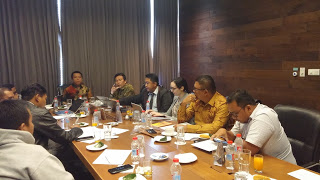
The workshop will be attended by election activists, officials from the Indonesian Electoral Commission, the Administrative Court, the Institute for the Study and Advocacy of Judicial Independence (LeIP), the Indonesian Centre for Law and Policy Studies (PSHK) and the Indonesian Election Supervision Board (Bawaslu).
This workshop is part of a broader collaborative project by Dr Fritz Siregar (Jentera/Bawaslu Commissioner) and Dr Melissa Crouch (UNSW). It is funded by the ANU Indonesia Research Grant scheme and the UNSW Indonesia Seed Funds.
Trisakti Law Faculty Workshop
Next week, on 23 August 2017 I look forward to talking at Trisakti University Law Faculty conference in Jakarta, Indonesia. My topic is on “Legal Culture and the Rule of Law in Indonesia: Religious deference and the blasphemy law”.
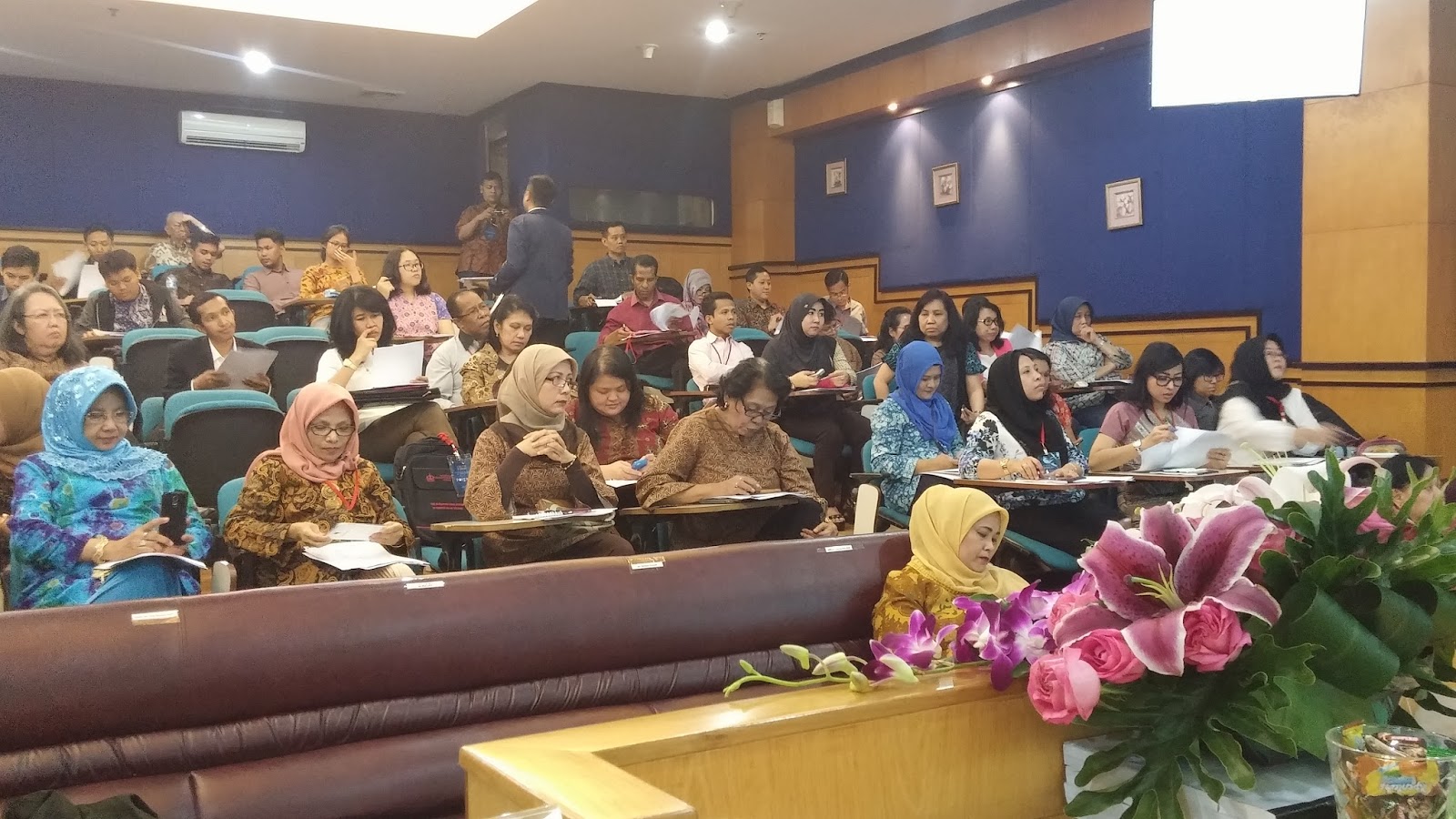
Abstract: The recent criminal trial of Governor of Jakarta, Ahok, has highlighted the controversy over the Blasphemy Law in Indonesia. This raises questions about legal culture, how and why law is used, and the rule of law in Indonesia. My presentation examines the role of fatwa issued against so-called ‘deviant’ religious believers convicted on charges of blasphemy. This is an issue of growing concern in Indonesia, where an increasing number of individuals have been convicted for the offence of blasphemy since 1998. It identifies that fatwa, despite its lack of legal status, may play an influential part in the legal process. A fatwa may be used as a justification or basis for allegations of blasphemy to be lodged with the police. Once a blasphemy case reaches the District Court, a fatwa may also be used as evidence in court to support the prosecutor’s argument that a person is guilty of ‘insulting a religion’. This raises the issue of how the legal system reconciles state criminal law with Islamic fatwa. I examine how Islamic opinions are given weight in court, despite the fact that a fatwa is not recognised as an official or legally binding source of law by the state in Indonesia. Drawing on illustrations from several cases of blasphemy, I argue that a practise of “religious deference” has emerged, where the District Courts defer to the opinion of Islamic religious leaders and fatwa on issues of religious sensitivity. This principle of religious deference is one means by which the secular state courts negotiate and reconcile the demands of legal pluralism.
Paper available at: https://papers.ssrn.com/sol3/papers.cfm?abstract_id=2678759
ASAA Conference 3-5 July 2018
The next Asian Studies Association of Australia Conference will be held in Sydney on 3–5 July 2018. Co-organised by the Sydney Southeast Asia Centre, the China Studies Centre and the School of Languages and Culture, this conference will bring together academics from across the disciplines with a shared interest in Asia. The conference is open to scholars, students and community members wishing to share their research and hear about the latest developments in Asian Studies. The theme for 2018, Area studies and beyond, builds upon the traditional interdisciplinary fields of research within Asian Studies and seeks to move beyond them, to celebrate the full breadth and depth of interest in Asia across all fields of research. Proposal submissions are now open for panels, individual papers and workshops. The deadline for submissions is 1 November 2017. Professor Simon Butt and myself are organizing a series of law panels, so please contact us if you would like to present a paper.
Law and Governance in Myanmar
On Thursday 27th July I have been invited to give a talk at RMIT University in Melbourne on “Law and Governance in Myanmar: The Courts and the Challenge of Judicial Independence”
The abstract of my paper is as follows: What can be learnt about the idea and ideal of judicial independence in authoritarian regimes? While idealised international standards and declarations of judicial independence note the need for separation from the executive, there is more often silence on the relative position of the courts in relation to the military. Yet in countries like Myanmar’s semi-military regime (2011-), discussions of judicial independence from the executive and legislature make little sense unless we first consider separation from military rule. Military involvement in the courts, both at a personal and institutional level, has become the norm over past decades in Myanmar. In light of this reality, this chapter considers the nature of judicial power of the Constitutional Tribunal and Supreme Court. It highlights debates raised over appointment and removal procedures, questions over which court should have jurisdiction on constitutional review matters, concerns of military-executive interference and the domineering attitude of the Parliament towards the courts. As a recent yellow ribbon campaign protesting against military transfers into the courts highlights, independence of the courts from military influence is a necessary yet difficult first step forward.
Professional Legal Education training

The ADB/UNSW Professional Legal Education program is continuing over two weekends in July. Participating in the program are 40 early career lawyers based in Yangon, Myanmar. Topics that are covered over these weekends include major projects, banking and finance, joint ventures and environmental law. The training has been possible with the partnership of professionals from several leading law firms in Myanmar.
Roundtable discussion: Indonesia’s Election Supervisory Board
Indonesia’s Election Supervisory Board (Bawaslu): Working Towards Election Integrity


On 29 June 2017, we were delighted to hosted guest speaker Dr Fritz Edward Siregar.
In the last week of June 2017, UNSW Law was delighted to welcome Dr Fritz Siregar, an alumni of UNSW Law, as a visiting scholar. While here, Fritz gave an engaging seminar on his new and important role as Commissioner of the Indonesian Elections Supervisory Board (2017-2022).
The electoral laws in Indonesia are currently undergoing major changes, and preparations will begin this year for the organisation and supervision of the impending April 2019 presidential and parliamentary national elections. Fritz and Dr Melissa Crouch of UNSW Law currently hold a UNSW Indonesia Seed Fund grant and a ANU Indonesia Research Fund grant to study judicial independence, the elections and the courts in Indonesia. They hosted a seminar on “Judicial Independence and the Courts” in Jakarta in January 2017, and they will host a second seminar on “Electoral Supervision and the Role of the Courts” in Jakarta in August 2017.
Courts and Constitutionalism in Contemporary Asia
Next week at the ICON conference we have a panel lined up on “Courts and Constitutionalism in Contemporary Asia”.
This panel seeks to explore the role of courts and how and why they do (or do not) contribute to building constitutionalism in contemporary Asia. The last few decades have seen the creation of a range of new and specialized courts in Asia, including constitutional courts. The role, function and authority of courts and the extent of judicial review powers varies across the region. What is common to these courts is the potential and risk of becoming deeply involved in matters of politics. In some countries, courts have come to play a critical role in building constitutionalism, but more often in Asia courts remain peripheral to the project of building constitutionalism. This panel seeks to explore and explain the role of courts in Myanmar, China, Singapore, Thailand and the Philippines.
Paper 1: Dialogue Among Dictators and the Many Lives of Constitutional Courts: The Constitutional Tribunal of Myanmar
Abstract: Myanmar is one of the most recent countries in the world to have established a Constitutional Tribunal. Yet the operation of the Tribunal flies in the face of assumptions common to global constitutionalism. Myanmar at present remains outside the influence of globalised judicial networks. Instead, the Tribunal is determined by its role as a forum for dialogue among dictators. The operation of the Tribunal has in many respects been a victim of its design and has left the Tribunal’s role highly dependent on the political powers of the day. I demonstrate this by looking at the different lives of the Constitutional Tribunal: its first (2011-2012), second (2013-2015) and third life (2016-). As a monumental shift has taken place from direct military rule to military-led constitutionalism in Myanmar, this article offers an important reflection on the main role of the Tribunal as a limited forum for dialogue among dictators.Bio: Dr Melissa Crouch is a Senior Lecturer at the Law Faculty, the University of New South Wales, Sydney. Melissa is the editor of The Business of Transition: Law Reform, Development and Economics in Myanmar (CUP 2017); Islam and the State in Myanmar: Muslim-Buddhist Relations and the Politics of Belonging (OUP 2016), and co-editor of Law, Society and Transition in Myanmar (Hart Publishing 2014). She is the author of Law and Religion in Indonesia: Conflict and the Courts in West Java(Routledge, 2014). She teaches in the areas of public law, comparative law, law and development, and Asian legal systems.
Paper 2: Chinese Constitutionalism: An Oxymoron?
This paper argues that it is a mistake–for both the field of comparative constitutional law and the development of constitutionalism in China–to define the core concepts of “constitution” and “constitutionalism” in a manner that excludes China. Even if such a move is well intentioned, it is likely to have the effect of marginalizing the comparative study of China by constitutional scholars. The marginalization of China as an object of study has deleterious effects not only for the field of comparative constitutional law, but also potentially for the development of constitutionalism in China itself. The goal should be to place China at the core of a genuinely comparative constitutional discourse, rather than relegating it to the domain of China specialists. This can be accomplished, moreover, without lapsing into apologism for either the Communist Party of China (CPC) or the PRC regime. Part II of this paper summarizes the competing views that scholars have taken on the state of constitutionalism in China. Part III develops a typology that highlights the numerous options for defining constitution[alism]. The definition of constitution[alism] can incorporate a combination of normative, practical, and formal standards, each of which in turn can be defined leniently or stringently. The fact that scholars have available to them not just the familiar binary choice between “thick” and “thin” definitional approaches, but rather a rich matrix of definitional possibilities, means that there are numerous options for placing China at the heart of comparative constitutional discourse without appearing even implicitly to endorse its current government. Part IV explores the value to the field of comparative constitutional law of taking China seriously as an appropriate object of study. Even though–or, perhaps, especially because–China lacks judicial review, the study of constitutionalism in China stands to benefit the field in several ways. China is not only an intrinsically important case to study, but also a rich and unique source of comparative data and experience with respect to three phenomena of considerable and increasing importance to comparative constitutional scholars¬–namely, (1) the role of statutes in the constitutional order; (2) the availability and operation of political rather than judicial forms of constitutional implementation and enforcement; and (3) the relationship between domestic constitutional law and international law. Finally, we conclude by theorizing as to the potential long-term impact of the Chinese Constitution on an authoritarian regime that seems at times committed to constitutional noncompliance. To the list of functions that other scholars have imputed to constitutions in authoritarian regimes, we nominate an additional function¬—namely, that of constructive irritant. Thanks to its extreme dissonance with the actual practice of constitutionalism, China’s formal constitution generates a dialectical and critical discourse that is uniquely difficult for the regime to suppress.
Bio: Wen-Chen Chang is Professor at National Taiwan University College of Law. Her areas of research include comparative constitutional law, international human rights law, international environmental law, administrative law, and law and society. She graduated from National Taiwan University with an LL.B. and LL.M. then served as a law clerk to the Chief Justice of the Taiwanese Constitutional Court before earning an LL.M. and J.S.D. from Yale Law School. Professor Chang serves on the editorial boards of the International Journal of Constitutional Law, Asian Journal of Comparative Law, and National Taiwan University Law Review. Her recent publications include Asian Courts in Context (CUP 2015, co-edited with Jiunn-rong Yeh) and Constitutionalism in Asia: Cases and Materials (Hart 2014, with Kevin Tan, Li-ann Thio & Jiunn-rong Yeh)
David Law is the Sir Y.K. Pao Chair of Public Law at the University of Hong Kong and the Charles Nagel Chair of Constitutional Law and Political Science at Washington University in St. Louis. He writes in the areas of public law, comparative law, empirical legal scholarship, legal globalization, judicial politics, and judicial behavior. He holds a Ph.D. in political science from Stanford, a B.C.L. in European and Comparative Law from the University of Oxford, and a J.D. from Harvard Law School. Professor Law served as a law clerk to the Honorable Stephen Reinhardt of the U.S. Court of Appeals for the Ninth Circuit and has previously taught at the UCSD Department of Political Science; National Taiwan University College of Law (as a Fulbright Scholar); Seoul National University School of Law; Georgetown University Law Center; and Princeton University (as the Martin and Kathleen Crane Fellow in Law and Public Affairs). His book on the internal workings of the Japanese Supreme Court, Nihon no saikosai wo kaibou suru [The Japanese Supreme Court and Judicial Review], was published in Japanese by Gendajinbunsha. Professor Law’s current projects include a handbook on research methods in constitutional law (under contract with Edward Elgar).
Paper 3: Cultural Texts as Constitutional Courts: Perceiving Public Power in Singapore
In the context of Singapore’s authoritarian politics, are courts the sites in which constitutional issues most potently and publicly unfold? This paper argues that, rather than the courts, Singapore’s cultural texts – specifically, the theatre of playwright Kuo Pau Kun – offer a rich and revealing record of constitutional contestation. The constitutional jurisprudence of Singapore courts continues (overwhelmingly) to illustrate the acuity of Worthington’s 2001 assessment that the judicial system negotiates a balance between “the need for a reputable judiciary with the requirement by the political executive for the judicial system to assist with the control of political opposition”. Turning therefore away from the courts, this paper delves into the public power of masked constitutional challenges through a discussion of the theatre of Singapore playwright Kuo Pau Kun.Detained without trial from 1976 to 1980, Kuo’s scripts express the struggle to be a rights-bearing citizen in the face of bureaucratic and securitized accounts of law; accounts that annihilate the emblematic fundamental freedoms guaranteed by the Constitution. At the same time, the arena of theatre enables an engagement with publics, advocacy for rights, and a sub-textual critique of the state that the courts might not facilitate. Tracing the constitutional challenges articulated through cultural texts – from Kuo’s theatre to more contemporary instances – this paper illuminates public power and constitutional discourses situated beyond the walls of Singapore’s courtrooms.
Bio: Jothie Rajah is a research professor at the American Bar Foundation and author of Authoritarian Rule of Law: Legislation, Discourse and Legitimacy in Singapore (Cambridge UP). She has published widely in interdisciplinary publications on transnational law and the rule of law, including in the Annual Review of Law and Social Science, Law & Social Inquiry, and Transnational Legal Theory, as well as in a number of edited volumes. She has been active as a member of the Law and Society Association, serving on its board of trustees, and co-founding and convening a CRN on British Colonial Legalities (15).
Paper 4: Who Is Doing the Judging?: the Thai Constitutional Court, 1998 – 2016
Abstract: Created in 1997 as part of a major constitutional reform, Thailand’s Constitutional Court (CC) has since become embroiled in major political controversies. Since the 2006 coup, because a number of high-profile decisions have favoured one political camp, its ability to act as an independent arbiter has been questioned. Observers have attributed this to close and long-standing relations between the judiciary and traditional political elites. Is this view justifiable? To answer this question, we first analyse how the court has behaved across political administrations in 32 high-profile cases since 2001. We then look at the socio-biographic profile of the bench, the political nature of nominations, and changes to its composition, particularly since 2006. Finally, we complement this analysis with network data on participants in classes offered by the Constitutional Court, which make it possible to look more closely at the links between political and judicial networks in Thailand. This study found evidence of a politically biased voting pattern and increasingly partisan nominations to the bench, though formally appointment procedures are apolitical. It thus provides evidence of the politicization of the court and the growing ties between judicial and political elites. It thus raises serious issues about the public legitimacy of the court and prospects for the rule of law in Thailand – issues critical to Thailand’s continuing political transition. Bio: Bjoern Dressel and,Khemthong Tonsakulrungruang joined the Faculty of Law, Chulalongkorn University, Thailand, in 2009. He lectures various courses in constitutional and administrative laws. His areas of interest include freedom of expression, religious freedom, public accountability, and environmental policy. Khemthong graduated from the Faculty of Law, Chulalongkorn University before earning his LLM at Yale Law School. Currently he is a PhD candidate at University of Bristol School of Law, UK.
Paper 5: Building constitutionalism? The Role of the Thai Constitutional Court leading up to the 2014 Coup
Abstract: The line dividing actions of courts seen as contributing to building constitutionalism and those seen as undermining constitutionalism is often narrow, and defined not only by factors internal to courts but also factors external to courts, including the way that actions of courts are responded to. The role of the Thai Constitutional Court in the lead up to the 2014 military coup is often seen to have been one that undermined constitutionalism, with some commentators going so far as to suggest that the court in the period was acting in concert with the military and traditional elite and that the military coup in May 2014 only formalized a judicial coup which had already occurred. This paper, by analysing decisions issued by the Constitutional Court in the lead up to the 2014 coup, will challenge this representation. It will show that within decisions of the court in the period there were not only elements which frustrated government objectives but also elements which frustrated elite aims, and that while there were elements of decisions which made it difficult for governance to proceed there was also evident a concern to avoid creating constitutional or political deadlock. It will argue that because of these features court decisions in the period had potential, had events played out differently, to help build and reinforce constitutionalism. It will suggest the fact they did not was, whilst in part attributable to imperfections in court action, largely also attributable to the way commentators and politicians responded and, ultimately, to untimely military intervention. As such it will suggest that the 2014 coup should not be seen simply as the military formalizing what the court had begun or the military stepping in following institutional failure, as the role played by the court leading up to coup was much more ambiguous than such representations suggest. Bio: Sarah Bishop (LLB (Hons)/BAsSt (Thai)(Hons)) is a PhD Candidate within the ANU College of Law, Canberra, Australia. Her primary area of research interest is Thai public law. Her doctoral thesis will explore the role of these and other courts in interpreting and applying constitutional rights.
Paper 6:The Informal Dimension of Constitutional Politics in Asia: Insights from the Philippines and Indonesia
Abstract: As expanded powers of judicial review and constitutional separation of powers have made courts major actors in the political landscape of Asia, their uneven performance has considerably puzzled observers. This article argues that a concern with formal institutional roles alone is not sufficient to explain how judiciaries deal with constitutional matters in countries not as institutionalized as Western democracies. Instead, to understand how courts in Asia actually operate, it is necessary to explore the informal dimensions of judicial politics, building on a growing body of work based on a variety of theoretical and methodological approaches. Supplementing what is already known about the informal dimension of judicial politics with specific evidence from high courts in the Philippines and Indonesia, the chapter assesses how informal ties influence aspects of judicial behaviour, and the consequences. For justices in Asia there is a dynamic tension between professionalism and informality that clarifies inconsistencies in high-profile constitutional matters. The findings illuminate larger issues at the intersection of courts and society throughout the region in ways that advance theoretical understanding.
Bio: Dr. Björn Dressel is a Senior Lecturer at the Crawford School of Public Policy at the Australian National University (ANU), and also currently holds an Australian Research Council Early Career Researcher Award (2013-2016). His research is concerned with issues of comparative constitutionalism, judicial politics and governance and public sector reform in Asia. He has published in a range of international journals, including Governance; Administration & Society; International Political Science Review, and Pacific Review. He is the editor of The Judicialization of Politics in Asia (Routledge, 2012) and co-editor of Politics and Constitutions in Southeast Asia (Routledge, 2016).
AsianLII Myanmar database expansion
AsianLII has recently expanded its database coverage of the All India Reporter
* All India Reporter – Oudh (6,330 documents)
<http://www.asianlii.org/in/cases/up/AllINRprOudh/>
* All India Reporter – Calcutta (11,000 documents)
<http://www.asianlii.org/in/cases/wb/AllINRprCal/>
* All India Reporter – Madras (12,877 documents)
<http://www.asianlii.org/in/cases/tn/AllINRprMad/>
* All India Reporter – Nagpur (5,224 documents)
<http://www.asianlii.org/in/cases/mh/AllINRprNag/>
* All India Reporter – Allahabad (3,750 documents)
<http://www.asianlii.org/in/cases/up/AllINRprAll/>
* All India Reporter – Sind (2,477 documents)
<http://www.asianlii.org/pk/cases/AllINRprSind/>
In 2016, AsianLII launched its latest free legal database: the Myanmar/Burma Online Legal Database: http://www.asianlii.org/resources/239.html . The collection includes a wide range of laws, articles, local and international case law and commentaries. It contains case law never made freely accessible online before, such as the All India Reporter Lower Burma series 1907-1922 ; the Upper Burma series 1913-1921, and the Rangoon series 1918-1941; and decisions relating to Myanmar of the Privy Council 1869-1941, among other primary and secondary legal materials. This growing database will be a critical resource for a wide range of legal actors including practising lawyers, government officers, judges, academics, students, and civil society organisations. It will play a crucial role in making law accessible and available in a way that it has not been in Myanmar in the past. In the future, it is hoped that the database will expand to include Burmese language materials.
How to use guide: An easy to use guide on how to search the database is available at this link: http://www.asianlii.org/mm/virtual_db/Myanmar_DB_intro.pdf
Background to the AsianLII database:
The database is developed by Professor Grahaem Greenleaf, Dr Philip Chung, Andrew Mowbray and the team at AustLII. Guidance has been provided by Dr Melissa Crouch and the Australia-Myanmar Constitutional Democracy Project of the University of New South Wales Law Faculty, Australia. The databases in this Myanmar/Burma collection have been developed by the Australasian Legal Information Institute (AustLII), an institution operated jointly by the Faculties of Law of the University of Technology Sydney and the University of New South Wales. It is committed to improving access to justice through access to legal information. In 2006, AustLII developed the Asian Legal Information Institute (AsianLII), which now includes over 300 databases from 28 Asian jurisdictions, provided with the cooperation of eight free access Legal Information Institutes (LIIs). AsianLII provides for searching and browsing databases of legislation, case-law, law reform reports, law journals and other legal information, where available, from each country in the region. One aim of the AsianLII project is to assist development of the local capacity of our partner organisations to develop and maintain independent local legal information to the standards of world’s best practice, and to integrate them into international free-access law networks such as AsianLII, CommonLII and WorldLII. Where possible and requested, AustLII will provide technical assistance to our partner institutions to develop these capacities. This may include the provision of AustLII’s Sino search engine and other software for LII development. It may also include AustLII support for applications by local partners to obtain resources. Some in-country training will be provided for our AusAID partner institutions
Just published: Emergency Powers in Indonesia
The exercise of emergency powers is always controversial. in a new article “The Expansion of Emergency Powers”, I identify the expansion of the type and scope of emergency powers through legislative reform. I examine the Indonesian Law on Social Conflict 2012, which allows a state of social conflict to be declared at the national, regional or local level in response to social conflict, such as conflict between religious or ethnic communities. The deliberate choice of the term “state of social conflict”, rather than “state of emergency”, is an attempt to obscure the nature of these powers. Analysis of these powers and the debate that has ensued suggests that the law expands the types of situation in which powers usually only reserved for an emergency are used, and by delegating this power to local authorities, the law in effect amounts to the expansion of emergency powers. I suggest that this should lead to renewed focus on meaningful limits and checks on the exercise of power during times of emergency.|
The article, The Expansion of Emergency Powers: Social Conflict and the Military in Indonesia, appeared in Asian Studies Review 41(3) (2017).
 Melissa Crouch