Sociolegal Conference at University of Indonesia

From 23-24 August 2019, the University of Indonesia Law Faculty will host the second Socio-legal Conference. This is in cooperation with Leiden University, KITLV, University of Melbourne, UNSW, University of Sydney and Nagoya University.

The theme of the conference is ‘Towards procedural and substantive justice’. The operation of law in a plural society is complex, in particular when social divides run deep in terms of ethnicity, religion, social status, wealth, knowledge and technology. Legal plurality and social inequalities have influenced the many legal reform programs that have been implemented during the past 50 years and prevented them from achieving their intended results. Most of these programs moreover focused on procedural rather than substantive justice reform – departing from the assumption that legal institutional development, improving the quality of legislation and enhancing access to justice will automatically generate legal social justice. However, this assumption is hard to sustain in the face of the continuing gap between procedural and substantive justice in the many fields that directly affect the daily lives of millions of Indonesians, such as natural resource management, labor, family, etc. The Conference in 2019 will look at such fields with the aim of mapping and explaining the problems in achieving substantive justice and of trying to find a way out of them.

Women in an Era of Anti-Elitism in Asia

*This article was first posted at Asian Currents, the blog of the ASAA.

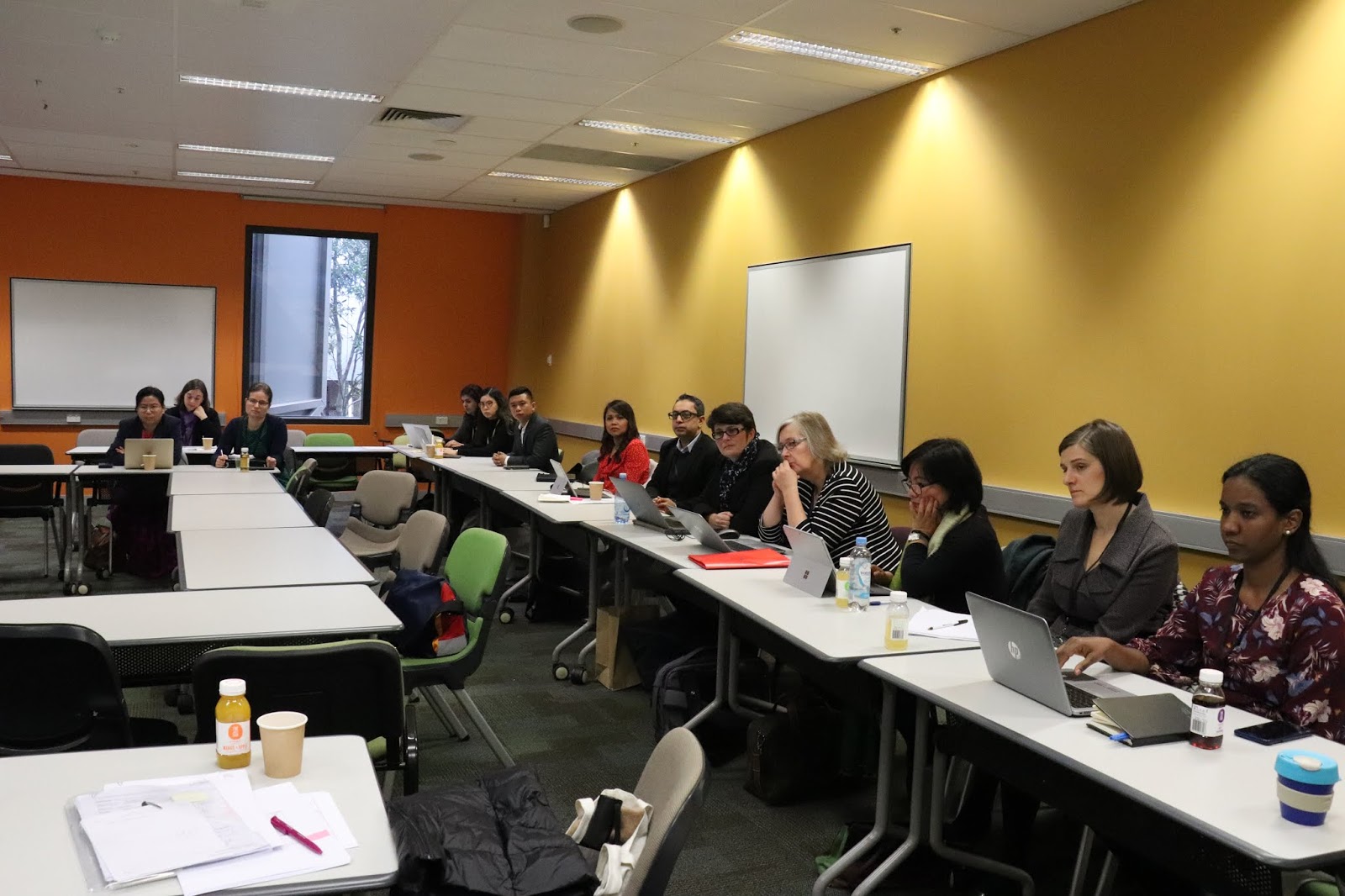
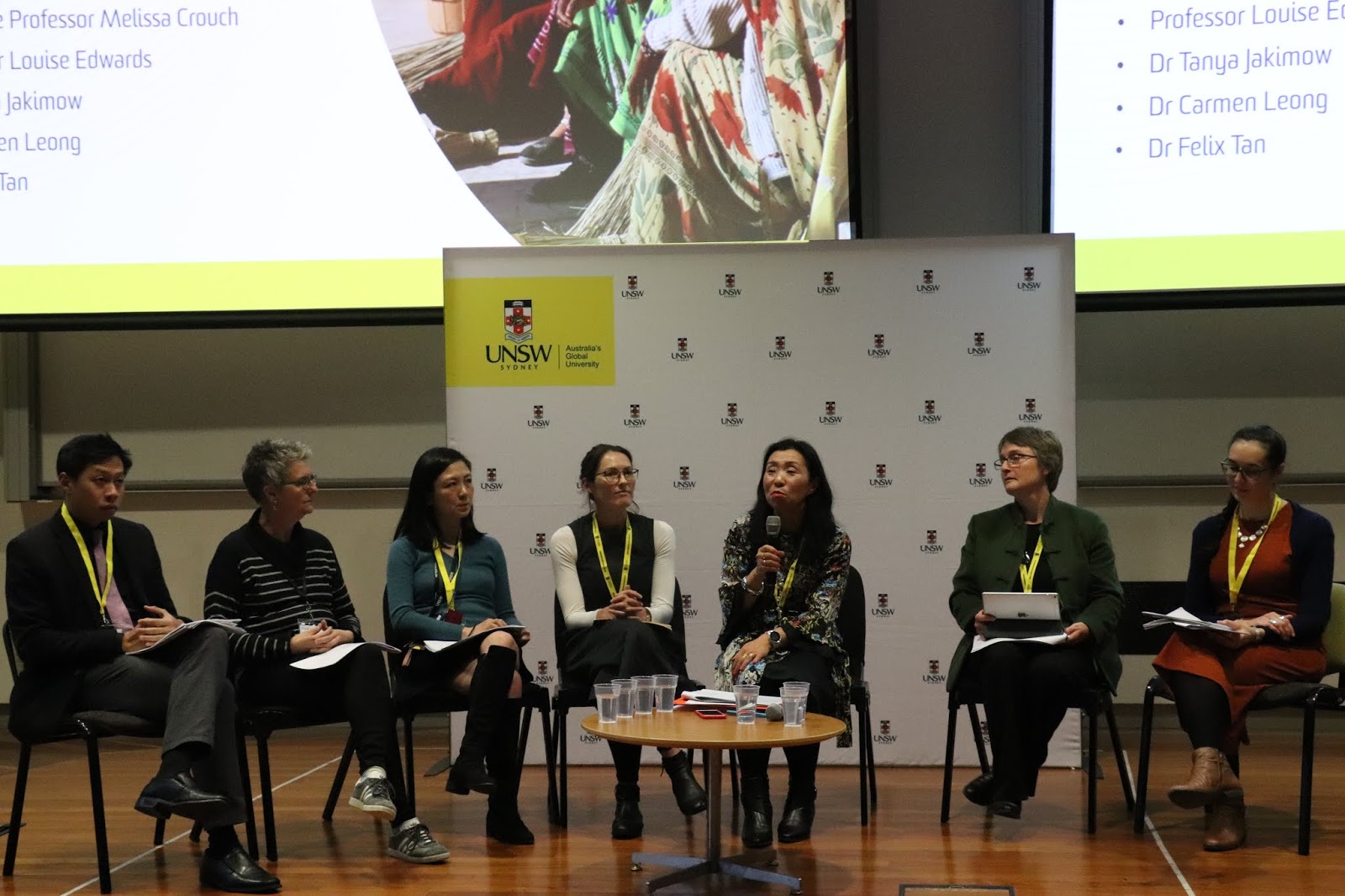
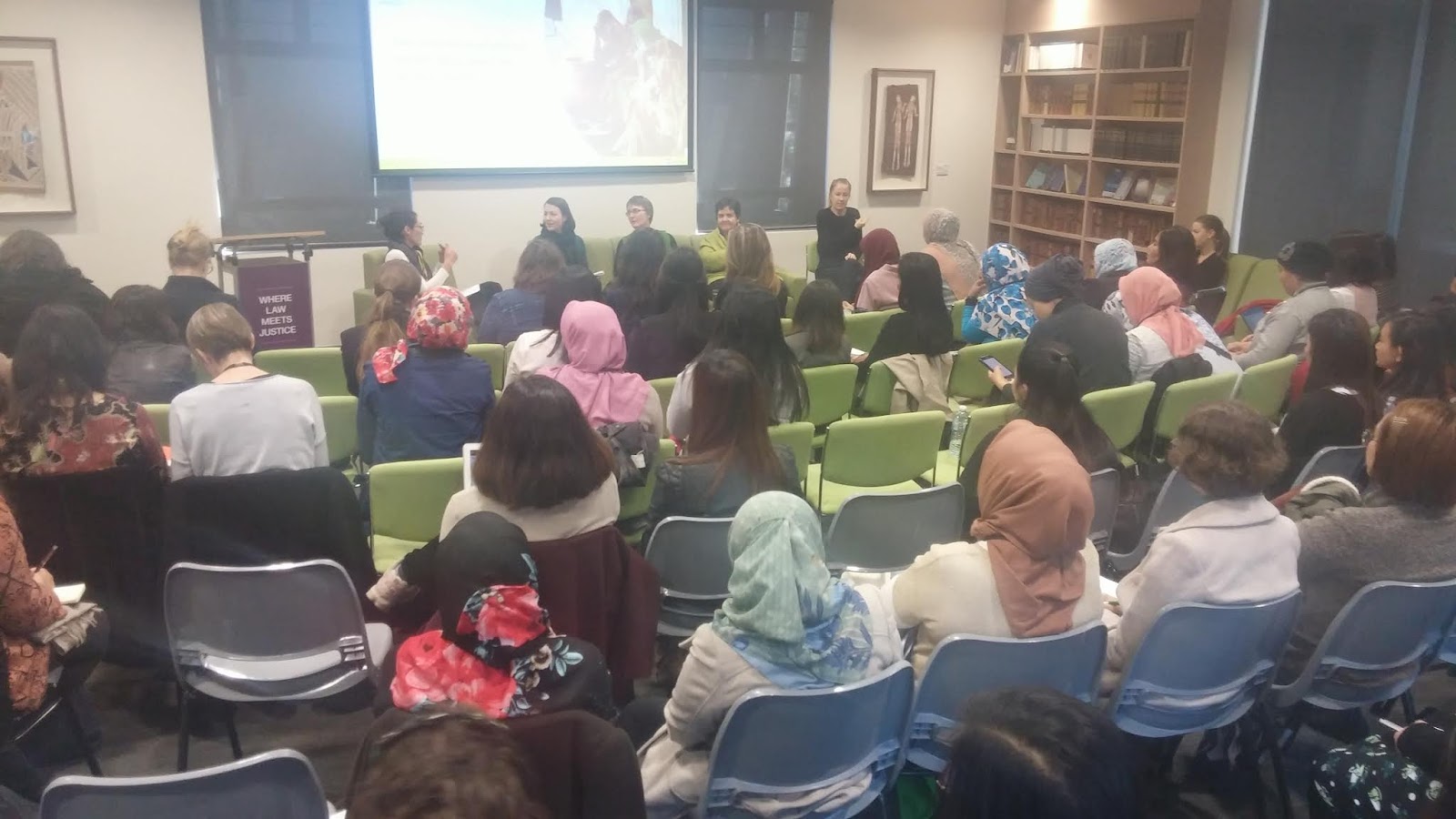
The theme of the Women in Asia Conference this year is “Women in an Era of Anti-Elitism in Asia”. The Women in Asia Forum began in 1978 and is affiliated with the Asian Studies Association of Australia. In 1981, the first Women in Asia Conference was held at UNSW, and the return of the conference to UNSW marks its 13th anniversary.

The Women in Asia Conference hosted speakers from over 15 countries in Asia, including India, Indonesia, Singapore, Japan, Sri Lanka, Thailand, Philippines, Malaysia, Hong Kong, Bangladesh, China, Iran and Korea. The speakers were drawn from over 30 universities in Asia. The 150 papers were diverse, with the largest concentration of papers on Indonesia (30 papers), and a considerable number of papers on the Philippines (thanks or no thanks to Duterte). 


The Women in Asia Conference is an opportunity to explore issues of gender and feminism theoretically, conceptually, politically and practically. Events like these offer a source of scholarly engagement and intellectual solidarity. More broadly, it is a reminder of our strength in solidarity and the possibility of our ideas when we are involved in broader collective efforts.

Themes of the Conference

In order to set the scene for this event, I will speak to the theme of the conference ‘Women in an Era of Anti-Elitism’, or at its core the challenge of populism to issues of gender equality. What does it mean to think about populism today? Many often refer to the ‘anti-establishment’ or ‘anti-elitist’ element to populism, which is certainly one aspect of it. But I want to suggest that populism, as Jan Werner Muller identifies, is also inherently anti-pluralist. Populism is a particularly exclusive and exclusionary form of identity politics.


Populism understood as anti-pluralism is a threat to democracy. Populism poses a threat to rule of law, a threat to inclusivity and pluralism, and a threat to social and economic equality. While populism understood in this way is certainly a cause for concern, I am encouraged to see the various forms of resistance that emerge. Where there is populism, there is also resistance to populism. And so we come to the core of my argument, which is that this age of populism contains a central paradox because it not only poses a threat to gender equality but at the same time it leads to new forms of resistance and efforts to enhance gender equality.

Let me briefly draw on some examples in my own field of research, law, as a way of illustrating the four of core themes at this conference.

Trump and His Nemesis, RBG

President Trump has many opponents, perhaps one of the most prominent figures is the ‘notorious RBG’, as featured in the movie “RBG”. RBG stands for Justice Ruth Bader Ginsburg, a woman judge on the US Supreme Court. The movie documents her work first as an academic and lawyer advocating for gender justice and equality, and then later in her life as a judge on the US Supreme Court. She has her own fan club, her own dance, and is famous for working out at the gym despite now being in her 80s. In short, RBG has a cult following in the way that no other female judge in the world has ever had.

But it was her comments in the lead up to the US presidential elections that really got people talking. See in the US, judges are not supposed to comment on politics. They are not supposed to be political. And they are not supposed to comment on the suitability of presidential candidates. But in 2016, Justice Ginsburg was reported in an interview with The New York Times saying that she did not think Trump was suitable for president.

Last year, I was in the Chicago at the time the US Senate confirmed Brett Kavanaugh as newest appointment to the Supreme Court. His appointment was preceded by a hearing by the Senate Judiciary Committee, which commanded the attention of the country. At stake in this hearing was a potential lifetime appointment to the Supreme Court that could change decades of legal rulings, including on issues affecting women’s rights. As part of that hearing, Dr. Christine Blasey Ford made allegations of sexual assault against Kavanaugh. Despite these allegations, Kavanaugh was nevertheless appointed to the Supreme Court. The hearing once again placed issues of sexual violence and male privilege in the spotlight.

That weekend as the mood in Chicago soured, I went for a walk outdoors. On my walk, I saw a sign hung over a bridge, which simply said “BELIEVEWOMEN” in black, bold letters. I was reminded that for every incident that feels like a step backwards in gender equality, there are acts of resistance. Where populism emerges, so too does resistance emerge to it.

So what does this have to do with Asia? After all this is the Asian Century, an era that demands attention to women in Asia. Several incidents in Asia have similar parallels.

The Philippines: Duterte v Sereno

Women judges in positions of influence have come under attack in the region due to political opposition and the rise of populism. One example is the backlash and legal consequences faced by former Chief Justice Maria Lourdes Sereno of the Philippines, an opponent of many of President Rodrigo Duterte’s policies. Sereno has criticised Duterte’s war on drugs and questioned the validity of his list of public officials deemed to be drug suspects. She also opposes the imposition of martial law in the southern Philippines.

In April 2018, Duterte publicly named Sereno as an ‘enemy’. Just a month later, she was put on trial on the basis of a quo warranto petition, although many claim this trial was politically motivated. The Supreme Court (that is, her colleagues) voted 8 against 6 to remove her from office on allegations that she had failed to fully disclose her wealth. Yet the trial was seen as an underhanded means of removing Sereno from office despite the failure to initiate impeachment proceedings, as many claim were the more appropriate response. On social media, supporters of Sereno used hashtags such as #SerenoStillOurCJ and #PeoplesChiefJustice.

Indonesia: Backlash against victims of sexual harassment

Let me take another example, this time from the #MeToo movement or its lack of traction in the region. Indonesia has seen a backlash against women who report cases of sexual harassment. For example, an administrator at a high school in Mataram, Baiq Nuril Maknun found herself subject to sexual harassment from the principal of the school. She decided to record one of his lurid telephone calls about his sex life as evidence of his behaviour. Instead, the principal was successful in a case against Nuril, who was charged for defamation under the Information Technology and Electronic Transactions Law 2008.

The court case against her was not successful at first instance. But then in 2018 the principle appealed the case. The Supreme Court agreed with the appeal by the principal and convicted the woman. This caused significant social outcry particularly from women’s rights groups in Indonesia, prompting Twitter hashtags such as #SaveIbuNuril and #KawalPKBuNuril.

One of the three judges in this case was a woman, Sri Murwahyuni. Sri Murwahyuni is only one of the four women out of 51 judges of the Supreme Court in Indonesia. This raises the tension and paradox that it is not necessarily about the entry of women into certain professions (such as the judiciary), but also about a change of mindset and a battle of ideas.

India: the trials of Indira Jaising

Moving from Indonesia to India, we see similar tensions emerging within the courts on issues of gender and sexual harassment. In April 2019, Indian senior advocate Indira Jaising was represented by senior advocate Anan Grover, who also happened to be her husband, in a contempt of court hearing at India’s Supreme Court. During the trial, the Attorney-General interrupted her lawyer and suggested that the senior Advocate (her husband) should not call her by name but instead call her ‘his wife’. Days later, on International Women’s Day, the lawyers collective The Leaflet published an open letter condemning the Attorney-General’s comment and the range of sexist remarks that Indira Jaising had been subject to throughout her years as an advocate in India’s Supreme Court.

In the weeks that followed, a former female employee of the Supreme Court voiced allegations of sexual harassment against the Chief Justice of India, Ranjan Gogoi. The Chief Justice convened a panel to hear the complaint that included himself, declaring that the allegations were a threat to the independence of the judiciary. Women advocates, including Indira Jaising, were among hundreds of lawyers who signed a letter to the President of the Bar Council rejecting the panel’s findings.

Not long after this panel deliberation, a court case was filed implicating Indira Jaising for tax malpractice (and her alleged CIA connections), which was perceived to be another attack on Jaising. The response of the Chief Justice and the Bar Council, and the emergence of the court case against Jaising, shows the real challenges still present for women in the legal profession and the obstacles to dealing with sexual harassment claims in particular.

All these examples – the US, the Philippines to Indonesia and India – illustrate the themes of the conference. These four themes are: gendered processes of power; Women in legal profession and judiciary; the role of technology in populism and gender inclusion; and gendering populism in Asia.

In all four cases, we encounter gendered processes of power and the appropriation of political power through gendered relations. In all four, the law and legal institutions have become key forums in the struggle for gender equality. In all four, technology and online platforms, including social media, has played a role. We see the possibility of technology to both foster the open exchange of ideas and mobilise people, but also its role in promoting particular causes and amplifying discriminatory messages. And in all four, we see the way in which populism is gendered. We see women being invoked as symbols of virtue as part of a resurgence of ‘traditional’ values. We face the challenge of considering whether gendered populisms operate differently in non-democratic or semi-democratic nations than it does in liberal democracies.

I have suggested that this age of populism presents a paradox. It is an age that features both President Trump and his nemesis Justice Ruth Bader Ginsburg (‘RBG’) in the US; and President Duterte and his nemesis former Chief Justice Maria Lourdes Sereno in the Philippines; the principal of a school who took vindictive legal action against the woman he harassed and Baiq Nuril, the victim, and civil society groups that supported her in Indonesia.

While the challenges to equality and empowerment in an age of anti-elitism are of real concern, we must also pay attention to the acts of resistance that emerge in response to it. We must also decide how we will respond. Unlike Justice Ruth Bader Ginburg and the judicial profession more broadly, we as academics are not bound by conventions that say we should not be political. To the contrary, the role of academics as independent intellectuals enables us to choose to engage in acts of resistance, no matter how political they might be. So take this invitation at the Women in Asia Conference to consider your response to these challenges of our times.

Melissa Crouch, Associate Professor and Associate Dean Research, UNSW Law

*Note: this is the opening speech at the Women in Asia Conference at the University of New South Wales, 21-23 June 2019

ASAA 2020 Futures Asia Conference

We are pleased to announce the 23rd biennial conference of the Asian Studies Association of Australia (ASAA) will be held at the University of Melbourne from 6th to the 9th July 2020. 

The theme for the conference is Future Asias.

The biennial Asian Studies Association of Australia (ASAA) Conference is the largest gathering of experts working on Asia in the southern hemisphere.  The  conference has been a regular feature of Australian scholarly life since 1976. 

The call for papers is available here.

The disciplinary champions for law, Jianlin Chen and Melissa Crouch, would like to encourage the submission of panels and papers on any aspect of research related to law in Asia.

U Ko Ni and Legal Reform in Myanmar

The International Bar Association has released a report examining the trial of the men responsible for the assassination of U Ko Ni, a prominent lawyer from Myanmar.

Here’s a brief recap on some resources available on U Ko Ni, his life and contribution, and the legal system he sought to reform.

This article is a personal tribute written immediately after his death:
Melissa Crouch (2017) ‘Myanmar’s legal voice of conscience: A personal tribute to U Ko Ni’ 31 January, New Mandala. [also available in Burmese]

An extended version of this article is available:
Melissa Crouch (2017) ‘Myanmar’s Advocate for Constitutional Reform: Saya U Ko Ni’, 17(1) Australian Journal of Asian Law 1-12.

Articles written around the commemoration of U Ko Ni’s death include:
Melissa Crouch (2018) ‘Democracy and Peace Frustrated in Myanmar: Remembering U Ko Ni’, 29 Jan, The Interpreter, Lowy Institute
Melissa Crouch (2019) ‘Hope, Despair and the NewNormal in Myanmar’ 9 May, The Interpreter.

On the death penalty, the sentence handed down to some of the perpetrators, see:Melissa Crouch (2019) ‘Death Penalty Paradox inBuddhist Myanmar’ 13 March, The Interpreter, Lowy Institute

For articles on the broader Rakhine State crisis, see

Melissa Crouch (2018) ‘Elections a Sham in RakhineState’ 1 Nov, The Interpreter, Lowy Institute

Melissa Crouch (2018) ‘Myanmar’s RakhineState Crisis: Diplomatic Challenges for ASEAN and Australia’ in Asia Society(ed) 

Disruptive AsiaSpecial Issue for the Australia-ASEAN Summit, Sydney, pp 8-12

Melissa Crouch (2017) ‘The Twisted Politics of Terrorism in Myanmar’ 12 Sept, The Interpreter

U Ko Ni is known for his contribution to the creation of the Office of State Counselor, as discussed in this chapter
Melissa Crouch (in press 2020) ‘Authoritarian Straightjacket or Vehicle for Democratic Transition? The Risky Struggle to Change Myanmar’s Constitution’ in T Ginsburg and Aziz Huq (ed) Implementing New Constitutions. Cambridge University Press

A brief introduction to the 2008 Constitution U Ko Ni sought to change is contained in:
Melissa Crouch (in press 2019) ‘The Constitution of Myanmar’, in David Law et al (ed) The Oxford Handbook ofConstitutions in Asia. Oxford University Press
An extended analysis of how the Constitution is understood and works in Myanmar is available in
Melissa Crouch (2019) The Constitution of Myanmar: A Contextual Analysis. Hart Publishing

U Ko Ni was particularly concerned with issues of judicial independence, the role of the Supreme Court and the Constitutional Tribunal in Myanmar, see for example

Melissa Crouch (2018) ‘The PrerogativeWrits as Constitutional Transfer’Oxford Journalof Legal Studies 1-23.

Melissa Crouch (2018) ‘Democrats, Dictators and Constitutional Dialogue: Myanmar’s Constitutional Tribunal’, 16(2) International Journal of Constitutional Law 421-446

Melissa Crouch (2017) ‘Judicial Power in Myanmar and the Challenge of Judicial Independence’ in HP Lee and Marilyn Pittard (ed) Asia-Pacific Judiciaries: Independence, Impartiality and Integrity. Cambridge University Press. pp 264-283

Women in Law in Asia

Women in the Legal Profession and the Judiciary in Asia

There will be a themed panels within the Women in Asia Conference, to be held on 21-23 June 2019 at UNSW Law

Session 2a: Women in the Legal Profession and Judiciary in Asia

Chair and Introduction to the themed panels: Associate Professor Melissa Crouch

Welcome and Introduction by key sponsor, Konrad Adenauer Stiftung: Ms Gisela Elsner, Head of the Rule of Law Programme Asia

Judge Saitip Sukatipan, Office of the Administrative Court, Thailand,

Judge Selma Alaras is presently the Presiding Judge of the Regional Trial Court, Branch 62, Makati City, Philippines

Session 2b: Women in the Legal Profession: Malaysia and Sri Lanka

Chair: Dr Imelda Deinla, ANU

Gendering ‘the Legal Complex’: Women in Sri Lanka’s Legal Profession

Dr Dinesha Samararatne, Dept of Public & International Law, Faculty of Law, University of Colombo, Sri Lanka

Women mobilizing for legal change peninsular Malaysia

Associate Professor Amanda Whiting, University of Melbourne

Session 2c Women and the Legal Profession in Indonesia, Myanmar, Laos and Cambodia

Chair: Dr Dinesha Samararatne, University of Colombo

An Alternative Story of Indonesia’s Legal Profession and Judiciary: Women and Legal Reformasi

Associate Professor Melissa Crouch, UNSW

Gender equality in law enforcement institutions in ASEAN: A Southern Policing perspective

Dr Melissa Jardine, UNSW Law

Gender Disparities in the Myanmar Legal Profession(Ms) Yin Myo Su, UAGO Myanmar
Session 2d Women in the Judiciary: Nepal, India, Malaysia

Chair: Amanda Whiting

The Long and Rocky Road for Women in the Malaysian Judiciary: A Case Study of the Syariah Legal System

Associate Professor Kerstin Steiner, La Trobe Law School

(De)Feminizing the Indian Judiciary: Gender Gap and Possible Objectivity

Dr Simashree Bora, Maharashtra National Law University, Mumbai, India

Examining Women in the Nepalese Judiciary with a Lens of Motility

Dr Subas Dhakal, Faculty of Business and Law, Curtin University

[DAY 2 – 23 June]
Session 2e Women in the Judiciary: Philippines, Thailand, the Pacific

Chair: Associate Professor Kerstin Steiner

Women Judges in Pacific Island Judiciaries

Anna Dziedzic, Melbourne Law School

Filipino women judges and their role in advancing judicial independence in the Philippines

Dr Imelda Deinla, ANU

Women in the Judiciary in Thailand

Sarah Bishop, ANU

Session 2f – Roundtable on Women in the Legal Profession and Judicial in AsiaChair: Melissa CrouchConcluding remarks by key sponsor, Konrad Adenauer Stiftung: Ms Gisela Elsner, Head of the Rule of Law Programme Asia

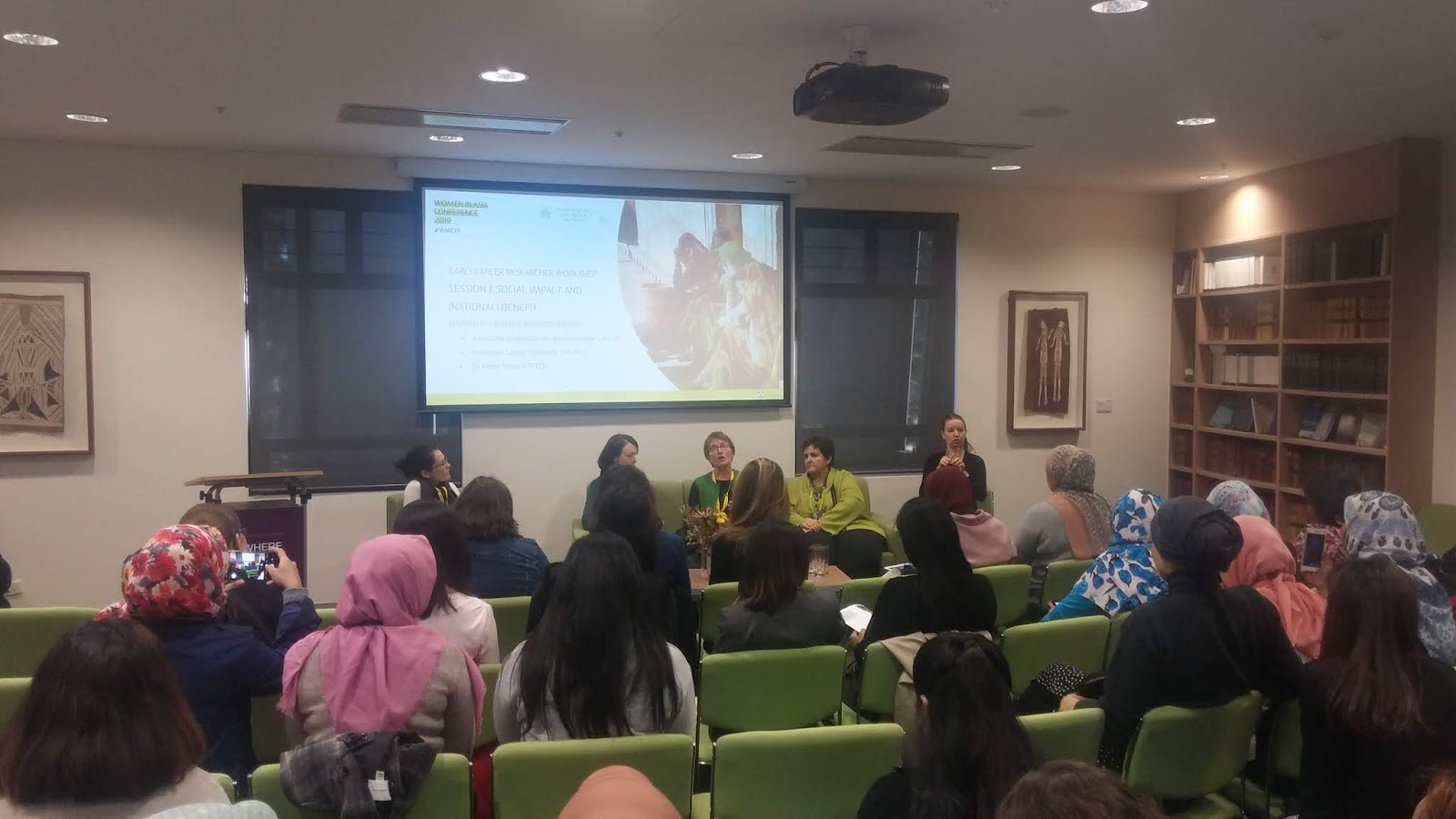
Early Career Workshop at UNSW Law

WOMEN IN ASIA CONFERENCE 2019

EARLY CAREER RESEARCHER (ECR) WORKSHOP PROGRAM

12 PM – 4:30PM, Friday 21 June 2019

Law Faculty Common Room, Level 2, Law Building (MAP REF: F8)

Session 1: Social Impact and (National) benefit

Chair: Dr. Tanya Jakimow (UNSW)

Speakers: Jan Breckenridge (UNSW), Louise Edwards (UNSW) & Sarah Cook (IGD, UNSW)

In this session we will hear from researchers across the Humanities and Social Sciences about how they narrate the benefit of their research and devise a strategy to increase social impact.


Session 2: Academic Service and Leadership

Chair: Felix Tan (UNSW)

Speakers: Mina Roces (UNSW), Melissa Crouch (UNSW) & Kuniawati Dewi (Indonesian Institute of Sciences, LIPI)

A session to discuss the difference between service and leadership roles, the gendered nature of academic labour, the considerations when deciding to take on such roles, and negotiation skills to ensure that such labour makes a positive contribution to your career.

Session 3: Building International Networks (of solidarity)

Chair: Melissa Crouch (UNSW)

Speakers: Priya Chacko (Adelaide University), Minako Sakai (UNSW Canberra) & Dina Afrianty (La Trobe University)

The session will also provide advice on building national and international research networks. In doing so it will consider ways that scholars may be marginalised from these networks on account of their gender, race, institution, accent, language and so on, as well as strategies to deal with this on an individual level, and most critically, as an academic community.

Session 4: Finding time for life

Chair: Carmen Leong (UNSW)Speakers: Hannah Bulloch (ANU), Karen Fisher (UNSW) & Monika Barthwal-Datta (UNSW)

Aimed to help participants find perspective in relation to their academic career among the other aspects of their life, as well as time management and negotiation skills to become more productive in the pursuits that advance that career.

The workshop will be followed by refreshments

PhD Scholarship on Constitutionalism

A PhD scholarship opportunity is open for applications at UNSW Law. The supervision team is Professor Rosalind Dixon, Professor Theunis Roux and A/Prof Melissa Crouch.

The topic is “A Liberal Response to Populist Constitutionalism’, and the project description is as follows: The post-2010 rise of populist constitutionalism poses the gravest threat to liberal constitutionalism in decades. From Poland to Turkey, and Hungary to Venezuela, populist political parties have succeeded in typifying liberal constitutionalism as an elitist political ideology rather than the universally applicable approach to good governance it claims to be. This project will use interdisciplinary law/social science methods to understand how liberal constitutionalists ought to respond to this challenge through self-reflection, improved constitutional design, contextually aware judicial decision-making and social movement activism. Findings will contribute to a burgeoning comparative literature on these issues. 

More details on the application process and generous scholarship terms are available here.

AMR LSA Book Panel: The Constitution of Myanmar

Author Meets Reader Session: The Constitution of Myanmar: Local and Comparative Challenges for Constitutionalism

This session will discuss the book, The Constitution of Myanmar: A Contextual Analysis, and consider the implications of this work for comparative law and society research in the field of constitutional law and politics. The book identifies how people in Myanmar understand and use the 2008 Constitution. This book suggests that the Constitution is crucial to the establishment and maintenance of the military-state. The military-state promotes the role of the military in governance, enforces an ideology developed during military rule, and organises institutions of the state around the principle of cooperative centralism. This timely book offers an important perspective on the role of law and legal institutions in Myanmar’s authoritarian regime.


Chaired by Dr Nick Cheesman, the panel includes: 

Cynthia Farid, University of Wisconsin Law School  

Professor Tom Ginsburg, University of Chicago, Law School

Maryam Khan, University of Wisconsin Law School  

Professor Heinz Klug, University of Wisconsin

Time to Reverse the Indonesian Language Disaster on our Shores

*This article first appeared in The Interpreter on 15 May 2019.

Opposition foreign affairs spokeswoman Penny Wong’s efforts to set out a vision for Australia’s foreign policy on Asia, embodied in Labor’s “FutureAsia” plans, are admirable. The specific focus of fostering knowledge of and engagement with Southeast Asia is welcome.

A key part of enhancing Southeast Asia knowledge capability is investing in languages, with Indonesian being the most obvious example. Australia needs to begin by taking positive steps to address the image problem of Indonesia that affects interest in Indonesian language studies.

Several years ago, I taught Indonesian in a primary school and high school in Victoria. In the classroom, I was confronted by my students’ negative perceptions of Indonesia. I had assumed that students might want to study Indonesian, at the very least in the hopes of going on a future holiday to Bali and learning how to bargain in the markets

Instead, it was clear that the vague understanding many students had about Indonesia came through exposure to negative Australian media or their parents’ views.

A lack of knowledge on basic facts contributes to these misperceptions. For example, as a Lowy Institute survey found, most Australians are not aware that Indonesia is a democracy. Since 2015, the number of people surveyed who correctly answered that Indonesia is a democracy has dropped by 10%.

Basic facts about Indonesia should be common knowledge in Australia, because it affects the attitudes people have towards Indonesia.

In my former role as a primary school teacher, I had an 11-year-old student tell me that they didn’t want to learn Indonesian because their mum and dad said that Indonesians are terrorists. It’s pretty hard to reason with an 11-year-old when extensive media coverage of terrorism, general public perceptions and perhaps even their own parents might support this false stereotype.

In addition to the image problem, Australia needs to radically overhaul and reinvest in institutional support for Indonesian studies.

Daily, I live through the consequences caused when universities make fatal decisions to cancel their Indonesian language programs, as a number of universities in Australia have done. These decisions are made, in part, because of the broader absence of a social, economic and political ecosystem in Australia that supports Indonesian studies.

Seriously low numbers of primary and high school uptake in Indonesian create negative downstream consequences for higher education institutions. In turn, the scale of Asian language programs in primary schools and high schools across Australia affects enrollments in languages at university.

In my high school, there were just five students in the Year 12 Indonesian class. When high schools choose to axe their Indonesian program, as in fact my old high school later did, this has major flow on effects for universities.

Language programs often depend upon on a steady number of students in the intermediate to advanced language classes. Without strong numbers of students graduating from high school having studied Indonesian language, the potential pool of students who go on to study Indonesian at university diminishes rapidly. When there are so few university students choosing to study Indonesian, this presents challenges for the viability of university programs.

But I also see the opposite problem. On my campus, I come across students who want to study Indonesian, but can’t. While studying and gaining credit through another university is theoretically possible, its often a logistical impossibility because of the challenges that students face to coordinate classes at two different universities and campuses.

As a result, some students that I know who learnt Indonesian in high school stopped studying Indonesian. This is an incredible waste of talent and interest in Indonesia.

So what can be done? Penny Wong’s vision on greater engagement with Southeast Asia is admirable but needs to be backed up with a long-term plan to enhance both general and specialist knowledge of the region.

Any major effort to make Indonesian studies a national priority in Australia would require a holistic approach. The government must take the initiative and acknowledge its role as an important driver of incentives for change. This includes incentives for students to choose Asian languages and support for universities to maintain or enhance their Asian language programs.

Shifting the dire predicament of Indonesian language studies in Australia in my lifetime will require a fundamental change in direction for the education sector across the board – primary schools, high schools and universities.

Its time for the next Australian government to reverse the Indonesian language disaster on our shores. After all, the “Asian Century” really should be the time to start learning an Asian language.