Reality check on Islam, Buddhism in Myanmar

Reality check on Islam, Buddhism in Myanmar


The West has been wondering what has gone wrong with Buddhism in Myanmar since 2012 and the violence primarily by Buddhists against Muslims. Yet I want to suggest that this is the wrong question, and that the West needs to take a look in the mirror. The West’s skewed view of Buddhism as a ‘peaceful’ religion, combined with the stereotypical view of Islam as inherently ‘violent’, are a core part of the problem.


Over the past month several reports and a barrage of media reports have surfaced in an attempt to explain the violence against Muslims in Myanmar. Yet implicitly such reports often promote the ‘real’ teachings of Buddhism as a ‘peaceful’ religion, and this adds to the Western stereotype of Islam as somehow ‘violent’.


Let me illustrate this by taking a different perspective to some of the issued raised by Contesting Buddhist Narratives. This report priorities understanding Buddhist fears and concerns, represented in the irrational ranting of the monk (and former convicted criminal) U Wirathu, who is mentioned or quoted from at least 25 times in the report. Yes, we need to understand all aspects of the conflict, but we have paid so little attention to Muslim communities in Myanmar, and this lack of information continues to fuel stereotypes about both Buddhism and Islam. This obscures Muslims’ concerns and fails to acknowledge that Muslims have serious fears too.


The basic premise of the report is that one key way forward is to use Buddhist narratives of non-violence. This is one option, but what about other alternatives, such as secularism? There is very clear precedent for this in Myanmar. General Aung San, the revered martyr and national independence hero, was a secularist. For example, in the drafting of the 1947 Constitution, he insisted that Burma should be a secular state. It was only after his assassination (when he died alongside his colleague and Muslim cabinet member, U Razak) that the provision in the draft constitution on religion was revised to give Buddhism a ‘special position’ (this was actually based on the Irish Constitution and its recognition of Catholicism). Things of course turned from bad to worse in 1961 when U Nu passed a constitutional amendment to make Buddhism the state religion, and the coup of 1962 followed soon after. Collective popular memory in Myanmar of General Aung San seems to have conveniently forgotten that he stood for secularism.


The strength of the report is its knowledge of Buddhism, yet it devotes just one paragraph to representing Muslim views. I understand the report does not claim to focus on understanding Muslims, but that’s precisely my point. Why do Buddhists who are promoting violence deserve our understanding, and Muslims who have suffered the consequences do not? This lack of focus on Muslims has led to many misunderstandings, not least the fact that the West equates Muslims in Myanmar with the term ‘Rohingya’. There is little appreciation of the diversity within the Muslim communities in Myanmar, nor is there any acknowledgement that most Muslims in Myanmar are probably not (or do not self-identify as) Rohingya. The concerns of Muslims in Rakhine State are acute and need to be addressed, but we can’t continue to ignore the fact that Muslim communities can be found right across Myanmar and that they have been severely affected by this violence.


The report also hints at the need to reform Islamic education, although it rightly acknowledges that efforts to promote tolerance in religious-based schools should take place in all religions. But let’s interrogate this view that somehow Islamic education institutions in Myanmar are partly blame (which is also what the Rakhine Commission Report indicated). Using Islamic education institutions as a convenient scapegoat indicates both an ignorance about these institutions, and a failure to remember the past. For example, prior to 1962 there were top schools run by Muslims (and there were also Muslim children who attended top Christian schools) and these institutions provided a broad education, alongside an Islamic education. When Ne Win took over in 1962, Islamic schools, like all other religious schools, were at risk of nationalisation. And many of these Islamic schools were nationalised. Some, however, that were able to convince Ne Win’s regime that they would only teach a narrow Islamic studies curriculum were allowed to continue to function as madrasas. So I think we need to keep past government policies in mind, before we go pointing the blame at Islamic education institutions.

Mosque in Mandalay, photo taken by M Crouch

The report does provide some interesting examples of how Buddhists are participating in inter-religious dialogue. But it fails to mention that some Muslims have been doing this for decades in Myanmar. There has been a very distinct movement in Myanmar for a very long time of Muslims who have bent over backwards to fit in, to tolerate Buddhism and its traditions, and to show that they belong to Myanmar too. These ‘Burmese Muslims’ have insisted on using Burmese language (rather than Arabic or Urdu) as the language of instruction in Islamic schools. These Burmese Muslims have insisted that their women should be free to wear Burmese dress if they choose (which is more revealing than traditional Islamic teachings allow). I am not saying Muslims should have to identify as ‘Burmese’ or compromise their religion in this way; of course if they chose to retain their Indian or Chinese or Shan identity alongside their Muslim identity, they should be allowed to too.


We need to put aside this preoccupation with proving that Buddhism is an inherently peaceful religion while remaining ambiguously silent on Islam. Western media and scholarship needs to intentionally work to dispel the assumptions that Islam is bad and Buddhism is good, that Islam is violent and Buddhism is non-violent, that a monk in a saffron robe is peaceful, but that a man with a beard and wearing a skull cap is violent. These dichotomies are false and contribute to the tensions.


It is time that the West takes a serious reality check on how it views Islam and Buddhism. While the violence and discrimination against Muslims is a reflection on Myanmar, the response of the West is a reflection of persistent stereotypes in the West about Islam and Buddhism.

This article first appeared in New Mandala on 17 November 2014.
Writs but no Weapons? Administrative Justice in Myanmar

Writs but no Weapons? A Stocktake on Administrative Justice in Myanmar


The former Chief Justice Ba U of the Supreme Court of Burma once described the constitutional writs as ‘weapons’. The early years of independence in Burma were a time of significant judicial activism, when the Supreme Court did not hesitate to strike down executive decisions that were beyond the powers of decision-makers or that infringed on the rights of citizens. It also did not hesitate to grant applications for habeas corpus in situations of unlawful detention.
A year ago, I wrote about the striking developments that had taken place in terms of the constitutional writs in Myanmar, a country in which citizens had virtually no opportunities to bring complaints against the government to court from the 1970s to 2011.


A significant number of cases continue to be lodged with the Union Supreme Court of Myanmar, and over 500 applications have been lodge since 2011. This means that there have been far more writ cases lodged with the current Supreme Court (2011-) than there were with the previous Supreme Court (1948-1962) during the period of parliamentary period.


Several of these writ cases have been reported in the Myanmar Law Reports, which is a government-run annual publication that publishes a small number of Supreme Court decisions per year. While only six cases have been reported so far, all of these cases were unsuccessful.

There are three key features evident from these cases. First, all the cases concern the decisions of a lower court. While this is one possible function of the writs, it does suggest that the main role of the Supreme Court at present is to supervise decisions of lower courts, rather than decisions of the executive.


Second, all cases concerned general procedural issues unrelated to substantive administrative law issues. For example, some court documents were incorrectly signed, or cases breached the time limitation under the Limitation Act 1909.


The third feature of these cases is that the decisions do exhibit a basic understanding of the constitutional writs as common law remedies. There is an evident understanding of the concept of jurisdiction and the need for the court to consider whether a government agency has acted beyond its jurisdiction.


Although no reported cases were unsuccessful, the media published the decision of a successful writ application in 2013 that related to an economics professor from East Yangon University who had been unfairly dismissed. The applicant was successful in this case and this decision was welcomed by the legal profession.


Yet the growing number of writ cases has attracted the attention of the Union Parliament, and this has led to debate over the last two years about how the Supreme Court should handle these cases. In mid-2014, these parliamentary debates resulted in the passage of the Law relating to the Writs Procedure, which sets out the details of the court procedure in these cases. In particular, it requires that a bench of three judges must consider every writ application, and that the Chief Justice must sit as one of the judges on every case.
Finally, in my previous post I highlighted an unreported case that was heard by the Supreme Court and concerned the application of habeas corpus of a woman from Kachin State who disappeared three years ago. The woman, Sumlut Roi Ja, was arrested on the pretext that she was affiliated with an illegal organisation (an ethnic army), yet she has not been seen by her family since. The Supreme Court dismissed the case on the basis that the military said they did not have her in their custody. 
Recently, some civil society groups have refused to recognise the decision of the Union Supreme Court and have called on the government to conduct an inquiry into the disappearance of Sumlut Roi Ja. The unresolved fate of Sumlut Roi Ja is a sobre reminder that it is still the weapons of the military, rather than the independence of the courts, that prevail in Myanmar.

Citation: This article first appeared as Melissa Crouch (2014) ‘Writs but no Weapons: A Stocktake of Administrative Justice in Myanmar‘ Int’l J. Const. L. Blog, 12 November.

Socio-legal Scholarship on Southeast Asia

The Asian Journal of Comparative Law is about to publish a special edition on Socio-legal Scholarship on Southeast Asia.

This special issue is the result of a workshop held in 2012 on Socio-legal Research on Southeast Asia: Themes, Directions, and Challenges, organised by Lynette J. Chua and Andrew Harding at the Centre for Asian Legal Studies, NUS, Singapore. As the first in a series of academic gatherings planned to advance socio-legal research on Southeast Asia, the workshop brought together leading scholars in the field and researchers from the region. Its goals were to foster an academic community, articulate potential research directions, and thus provide the bases for subsequent conferences and projects that engage the broader field of socio-legal studies while giving voice to Southeast Asian perspectives and experiences.

See below for the articles included in the edition:

Socio-legal Scholarship on Southeast Asia: Themes and Directions
Guest Editors: Lynette J Chua and Melissa Crouch

Charting Socio-Legal Scholarship on Southeast Asia: Key Themes and Future Directions
Lynette J Chua

Revolution Imagined: Cause Advocacy, Consumer Rights, and the Evolving Role of NGOs in Thailand
Frank Munger

New Transnational Governance and the Changing Composition of Regulatory Pluralism in Southeast Asia
John Gillespie

The Conceptualisation of Pro Bono in Singapore
Helena Whalen-Bridge

The Philippine Supreme Court and Regime Response, 1970–2000
Stacia L Haynie and Tao L Dumas

Alliances and Contestations in the Legal Production of Space: The Case of Bali
Agung Wardana

Myanmar’s Muslim Mosaic and the Politics of Belonging

Note: This talk was given at the Southeast Asian Human Rights Network Conference on 15-16 October 2014 in Kuala Lumpur, Malaysia. One of the co-panelists, Pak Ulil Abshar Abdullah who is well-known as a proponent of liberal Islam, was banned from entering Malaysia, but was able to give his presentation via skype. On the same day, the Malaysian Bar Council conducted a peaceful protest in support of law professor Azmi Sharom (one of the organisers of the conference), to protest against the sedition charges he faces. A video recording of the session will appear on Libertv shortly.
Good morning and thank you for the opportunity to be here. The Southeast Asian Human Rights Network is an incredibly important initiative that brings together both advocates and scholars to discuss pressing issues in the region. I think it can set an agenda for future research in terms of the key human rights concerns that affect the region.


In setting this agenda, one of the most important choices that we face is the topics that we choose for scholarship and advocacy. I want to make an argument today for why we need more scholars to choose to study Islam in Myanmar, the gaps that they need to fill and the broader contribution this could make to discussions on the human rights of Muslims in Myanmar.

One reason that the Muslim communities of Myanmar now need to be understood by both the West and by countries in Asia is due to the large scale migration that has taken place. There has been significant irregular migration of Muslims, especially the Rohingya, to parts of South Asia including Bangladesh, Pakistan, India, and even as far as parts of the Middle East, particularly Saudi Arabia, and to Southeast Asia, including Malaysia, Thailand and Indonesia.


Some have made their way as asylum seekers, or as recognised refugees through the United Nations High Commission for Refugees, to Western countries including the United States and Australia. My own experience since 2007 has been with the Burmese community in Melbourne, where there are a handful of Anglo-Burman and Muslim families, who fled Burma in the 1960s and 1970s; 8888 generation activists and their families who came to Australia in the 1990s; Burmese Muslims and other refugees from Karen State who have arrived since 2005; and since 2013, Rohingya asylum seekers who were detained at one of Australia’s off-shore processing centres until their claims for asylum were recognised.
We need to see this diversity inherent in Myanmar’s population, and this includes within the Muslim communities. How do we begin to capture the diversity and richness of Myanmar’s Muslim mosaic? Central to the politics of belonging is how Muslims define themselves. Let me take the 2014 census as an example of how Muslims are seeking to redefine their identity.
International commentary on the census primarily focused on the categories the government would use to mark religion and ethnicity, and specifically whether it would allow individuals to identify as ‘Rohingya’. But there was an absence of coverage of broader Muslim responses to the census. Observers failed to see the fierce discussion and debate within Muslim communities about what categories they wanted to use to define their religious and ethnic status in the census.
Many in the Burmese Muslim community were confused: they did not want to list their ethnicity as ‘Burman’, even if they identified as part Burman. This was because they felt that the ethnic category ‘Burman’ may be conflated by the government with ‘Buddhists’, and therefore overestimated the numbers of Buddhists. On the other hand, as Muslims who take pride in their ‘Burmeseness’ – both in terms of their ancestry as well as the use of Burmese language, clothing and culture – wanted recognition that they belong to Myanmar too.
As a compromise, some leaders from the Burmese Muslim community were advocating for the use of the term ‘Pathi’ Muslim. Here is where history is crucial: this is a term that was used during the period of the kings, and revived in the 1960s, in order to carve out specific recognition for this group. The term Pathi is today used in a broad sense to encompass Muslims of many different ethnic backgrounds in Myanmar, but particularly those with part-Burman ancestry.
From another perspective, some religious leaders from the Indian Muslim community issued a fatwa (Islamic legal opinion) to their community members to instruct them on how to list their identity in the census. They emphasised that Muslims should not be afraid to list their religious identity on the census. Some Indian Muslim leaders even argued that it was 

haram (forbidden) for a Muslim to fail to list their religion on the census.
Different debates again were held within the minority Shiite community, with some Islamic religious leaders from Yangon advising that they should list themselves as ‘Mogul Shia’ on the census, although some Muslim Shiite leaders from Mandalay disagreed. Like the Burmese Muslim resurrection of the term ‘Pathi’, the use of ‘Mogul Shiite’ was also an attempt to revert back to past categories – in this case the reference to Muslims who had migrated from the Mogul empire – in order to recreate and redefine their future as a community in Myanmar.


This brief insight into broader debates surrounding the 2014 census suggests that scholarship needs to go beyond debates about whether the term ‘Rohingya’ was used (not to diminish the importance of this issue), and recognise the broader discussions around how Muslims want to be identified by the state.

Let me turn now to identify several key themes in academic literature where glaring gaps need to be filled, and misconceptions and bias need to be addressed. The first theme is the history of Muslims in Myanmar.


There are three major phases in scholarship on the history of Islam in Myanmar: Muslims during the time of the Burmese kings; Muslims under colonial rule in Burma; and Muslims during the period of parliament democracy (1948-1962). We catch glimpses in scholarly literature of the important role some Muslim communities played during the time of the kings. Historians have referred in passing to Muslims who served the kings, and the mosques that were established during this period. Yet some historians have effectively written Muslims out of the history of Myanmar. As a scholar recently noted to me, a historian would not be taken seriously today if they wrote a history of the United States that excluded the Jews or the African American community. In the same way, we need to be critical of histories of Burma that have excluded Muslim communities.
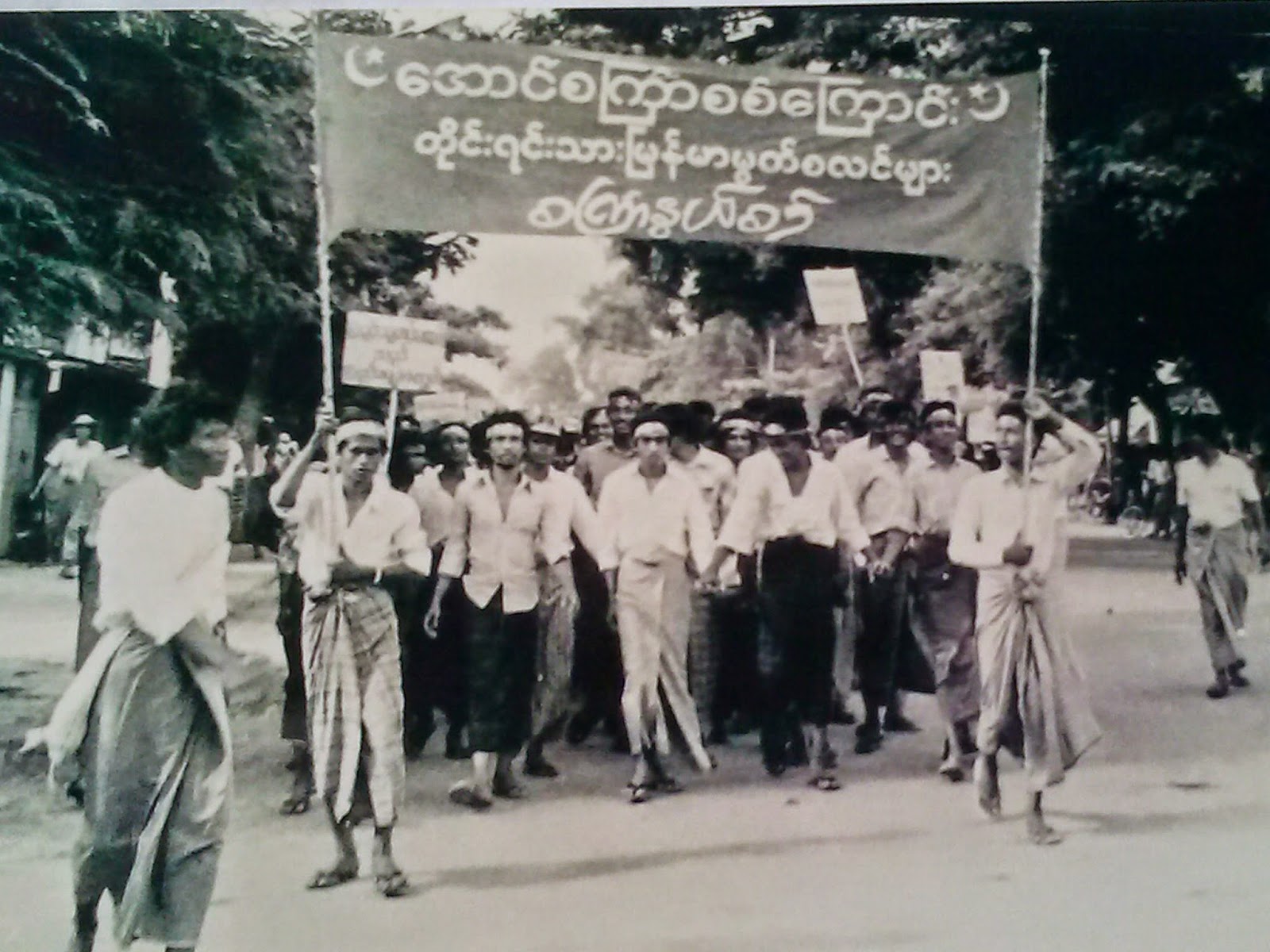
The second theme is Muslim political engagement in Myanmar. Some Muslims have been active in the political arena and have made a vital contribution to national politics, yet this has not received sustained attention. Little has been written on the role of Muslims in public life since the 1960s, yet Muslims were politically active in key political moments, such as in 1988 when the Muslim community in Mandalay organised collective demonstrations and protests against the socialist regime. Studies on the positive contribution key Muslims have made to political life could contribute to shifting the current negative discourse that effectively excludes Muslims from national politics.

Muslim protests in Mandalay, 1988

The third theme is Muslims in times of crisis. The key example here is research on the Rohingya that raises crucial issues of citizenship, statelessness, and irregular migration, although there is a need for rigorous academic engagement to inform advocacy efforts (such as the work of Nausheen Anwar).


Another example is the perceived sense of crisis in relation to inter-religious marriage and the position of Burmese Buddhist women. The literature on ‘women’ in Myanmar is narrow as it has generally focused on Burman and/or Buddhist women, or at least ‘non-Muslim’ women. It has been assumed that inter-religious marriage primarily takes place between a Burmese woman and a Muslim man, which even if this was the case in the past is not necessarily the case today. We need scholars who can contextualise today’s debate on inter-religious marriage. For example, the 1954 law the allowed women to divorce their Muslim husband was actually introduced by Minister for Justice U Khin Maung Latt, who was Muslim, in response to the social need to allow Burmese women (who had been married to Indian Muslim men who were forced to flee Burma) to dissolve their marriage because of the difficulties women face obtaining a divorce under Islamic law. Yet there is no evidence of such a social crisis today, and such perspectives need to challenge the stereotypes that dominate contemporary debates.


The fourth theme is the practise of Islam among the Muslim communities of Myanmar. Most Muslims in Myanmar are Sunni Muslims of the Hanafi school of law, although some follow the Shafi school of law. Muslims therefore have more in common with communities in South Asia, compared to Muslim communities in Southeast Asia. There are almost no studies to date on the beliefs and practises of these Muslim groups. This is despite the fact that Islamic personal law is recognised by the state and that Muslims can go to the court to have family matters decided in accordance with this law. We must not dismiss Islamic law in Myanmar as ‘artificial’, but rather seriously consider what it means for Muslims today.
To conclude, the Muslims of Myanmar clearly constitute an understudied area of research for Burma Studies, Islamic Studies and Asian Studies more broadly. I want to suggest that future scholarship in this area must do two things in particular.


First, we need to displace Buddhism from its privileged place in the field of Burma Studies. There is a clear disconnect between the way we view Islam and Buddhism. Buddhism, I would suggest, has been protected, idealised and shielded from scholarly criticism for too long. I am not suggesting that Buddhism is not an important part of the study of Myanmar. On the contrary, just as Islam is critical to understanding the Indonesian local context, or Catholicism is vital to the study of the Philippines, Buddhism is clearly a central part of the study of Myanmar.


Yet we must be willing to reject the rose-tinted glasses with which the West often views Buddhism, in contrast to the perception of Islam as a violent religion. We must reject perpetuating the stereotype that Islam is inherently ‘bad’ and ‘violent’ and that in contrast Buddhism is ‘peaceful’, ‘non-violent’, and ‘good’. We must recognise that the tendency for violence can arise in any religion, including among those who identify with Buddhism or who seek to use Buddhism as a convenient rallying point. The evidence we have suggests that it is Buddhists who are the main cause of violence against Muslims in Myanmar.


The second aspect is related more broadly to the study of Islam in Asia. For too long Muslims in Myanmar have been overlooked, ignored and forgotten in discussions and debates on Islam in both South Asia and Southeast Asia. We must stop acting as if Islam in Myanmar is peripheral and irrelevant, or an anomaly that does not really fit. Rather, we must begin to see the potential for the study of Muslim communities in Myanmar to offer fresh insights and generate new knowledge, as something of a ‘crossroads’ for Islam between South Asia and Southeast Asia.


The opportunity is there for scholars from a wide range of disciplines to begin undertaking this task. There is a need for historians who are willing to do the hard work of reconsidering historical sources and where possible discovering new ones. There is a need for ethnographers and anthropologists to spend time in the field to get to know these Muslim communities in order to construct rich ethnographies of contemporary community dynamics. There is a need for religious studies and Islamic studies scholars to take the study of Islam in Myanmar seriously.


I could go on. The point I want to make is this: there is a need for an informed and scholarly response to contemporary issues facing the Muslim communities of Myanmar. Scholars can play a vital role in informing these human rights issues by addressing some of the obvious bias and gaps in existing literature. I hope some of you make take up this challenge.
Note: This speech is adapted from a edited book on ‘Islam and the State in Myanmar: Muslim-Buddhist Relations and the Politics of Belonging’ (forthcoming 2015).


Citation: Melissa Crouch, ‘Myanmar’s Muslim Mosaic and the Politics of Belonging‘ 5 November 2014, New Mandala

Access to Justice and Administrative Law in Myanmar

Administrative law is an important part of access to justice because it can operate as a check and balance on government decision-making, and provide an avenue for individuals to seek review of government decisions.

In a report sponsored by USAID and TetraTech for their ‘Promoting the Rule of Law in Myanmar’ program, I emphasise the importance of administrative law in Myanmar in promoting good governance, accountability and checks on executive power. 


The main avenue for judicial review of administrative action in Myanmar is the constitutional writs under the 2008 Constitution. Since 2011, a large number of applications for the constitutional writs have been brought to the Supreme Court. The Writ Procedure Law 2014 was introduced to clarify the Supreme Court procedure for handling writ cases. The constitutional writs are a new area of law and support needs to be provided to a range of legal actors in order to take hold of the potential opportunity this provides. 


Efforts must also go beyond the constitutional writs to the broader court system in which they exist, as well as the wider legal environment and avenues for independent non-judicial mechanisms for review of government decisions. 


The report considers how constitutional writ cases have been used since 2011, and the response of the courts. It places Myanmar and its system of administrative law in comparative perspective. It also considers various non-judicial institutions that are now common in countries around the world – such as freedom of information laws and ombudspersons – that can create further avenues for review of government decisions.


The report is available here.

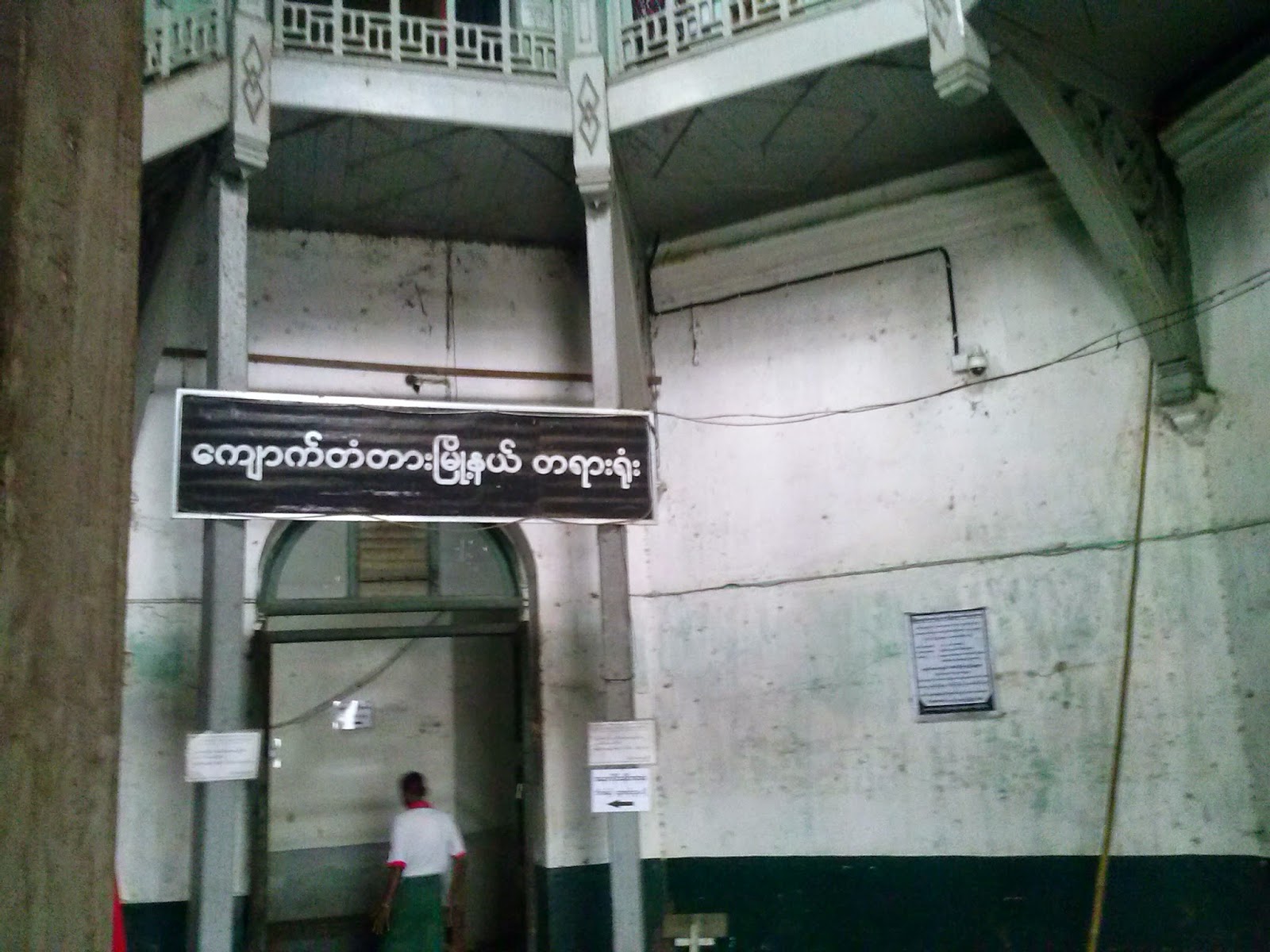
West Yangon Township Court

Human Rights Resource Centre study on religion in ASEAN

I was recently interested to learn of some of the new research being done in ASEAN countries by The Human Rights Resource Centre. The centre is based at the University of Indonesia, Jakarta, and is affiliated with ASEAN.
Its most recent publication is a series of country reviews of judicial training in ASEAN countries. In early 2015, it  will be launching a similar set of comprehensive reports on freedom of religion and state regulation of religion in ASEAN countries.
For more information on the study on religious freedom in ASEAN countries, see here.

Southeast Asian Human Rights Network conference

Next week, from 15-16 October 2014, the third international conference on Human Rights, Peace and Conflict in Southeast Asia will be held, hosted by the Southeast Asian Human Rights Studies Network and the Faculty of Law and Human Rights Research Centre, University of Malaya, KL. The conference will draw together a diverse group of scholars, researchers, activists and students to discuss a range of contemporary issues central to promoting human rights in the region.

In a panel on ‘Religious Freedom and Tolerance in Southeast Asia’ organised by Ms Dian Shah, I will be giving a talk on ‘Myanmar’s Muslim Mosaic: Religion and the Politics of Belonging’.

Book: Law and Society in Myanmar

An edited collection on ‘Law, Society and Transition in Myanmar’ will soon be published by Hart Publishing. This edited volume addresses the dynamics of the legal system of Myanmar/Burma in the context of the transition to democracy and a quasi-civilian government. 

The edited volume includes the following chapters:

PART I: THE LEGAL SYSTEM OF MYANMAR

Chapter 1: Introduction: Myanmar, Law Reform and Asian Legal Studies
Melissa Crouch and Tim Lindsey
Chapter 2: A Short Research Guide to Myanmar’s Legal System
Melissa Crouch and Nick Cheesman
Chapter 3: The Layers of Legal Development in Myanmar
Melissa Crouch

PART II: THE COURTS: PAST AND PRESENT

Chapter 4: Is Burmese Law Buddhist? Transition and Tradition
Andrew Huxley
Chapter 5: Bodies on the Line in Burma’s Law Reports 1892-1922Nicholas Cheesman
Chapter 6: Understanding the Myanmar Supreme Court’s Docket: An Analysis of Case Topics from 2007 to 2011Dominic Nardi and Lwin Moe

PART III: CONSTITUTIONALISM

Chapter 7: What’s So Bad about Burma’s 2008 Constitution? A Guide for the Perplexed
David Williams
Chapter 8: The Common Law and Constitutional Writs: Prospects for Accountability in Myanmar
Melissa Crouch
Chapter 9: Constitution-making in Myanmar: Insights from World Experience
Anna Dziedzic and Cheryl Saunders

PART IV: ECONOMIC, POLITICAL AND BUSINESS REFORMS

Chapter 10: Legislative Foundations of Myanmar’s Economic Reforms
Sean Turnell
Chapter 11: Elections and the Reform Agenda
Michael Lidauer and Gilles Saphy
Chapter 12: A Principled Approach to Company Law Reform in Myanmar
Melinda Tun
Chapter 13: The Securities Exchange Law and Prospectus Regulation: Early Sketches of Equity Capital Market Law and Regulation in Myanmar
Tun Zaw Mra

PART V: LAW ENFORCEMENT, CONFLICT AND DISPUTE RESOLUTION

Chapter 14: Police Reform and the Civilisation of Security in Myanmar
Andrew Selth
Chapter 15: Legal Perspectives onIndustrial Disputes in Myanmar
Kyaw Soe Lwin
Chapter 16: War, Law and Politics: Reflections on Violence and the Kachin
Nicholas Farrelly
Chapter 17: Civilian Protection and the Politics of Humanitarian Action in Kachin State
Alistair Cook

PART VII: MYANMAR LAW IN REGIONAL AND COMPARATIVE PERSPECTIVE

Chapter 18: Unlike Any Land You Know About? Myanmar, Law Reform and the Indonesia Model
Tim Lindsey
Chapter 19: The Regional Context of Myanmar’s Democratic Reform: What Role for ASEAN’s Human Rights Institutions?
Catherine Renshaw
Chapter 20: Law and Development in its Burmese Moment: Legal Reforms in an Emerging Democracy
Andrew Harding

The discount order form is available here.

Review of Scholarship on Myanmar Law

The recent edition of the Pacific Rim Law and Policy Review contains several articles on Myanmar, including on the topic of sovereign wealth funds and responsible investment.


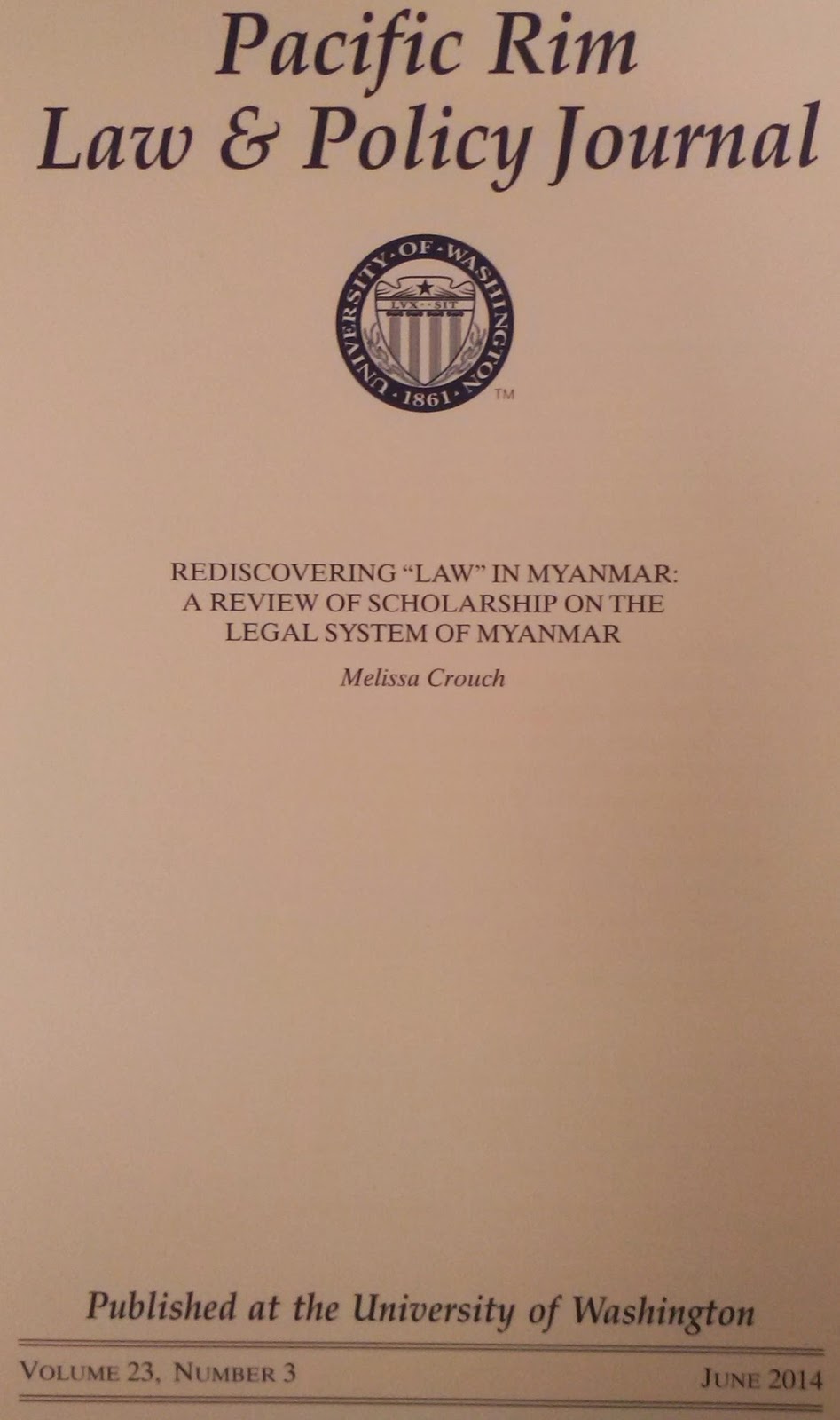
My article is on “Rediscovering ‘Law’ in Myanmar: A Review of Scholarship on the Legal System of Myanmar”. The legal system of Myanmar is an understudied area in the academic field of Asian Legal Studies. This article provides a map of scholarship that exists on law in Myanmar that can be built on in the future. It identifies the fields of law that have been the object of knowledge, the key issues and arguments that have driven research on law in Myanmar, and the central academics whose oeuvre of publications have sustained the field. The article is organized around four broad themes: custom, religion and the law; public law and governance; corporate law; and the politics of law. As we begin to imagine the next generation of legal scholarship, it is imperative for future research on Myanmar law to be grounded in its social, political and historical context by engaging with the existing body of social science literature on Burma Studies more generally.

The full paper is available here.

Cause Lawyers in Asia

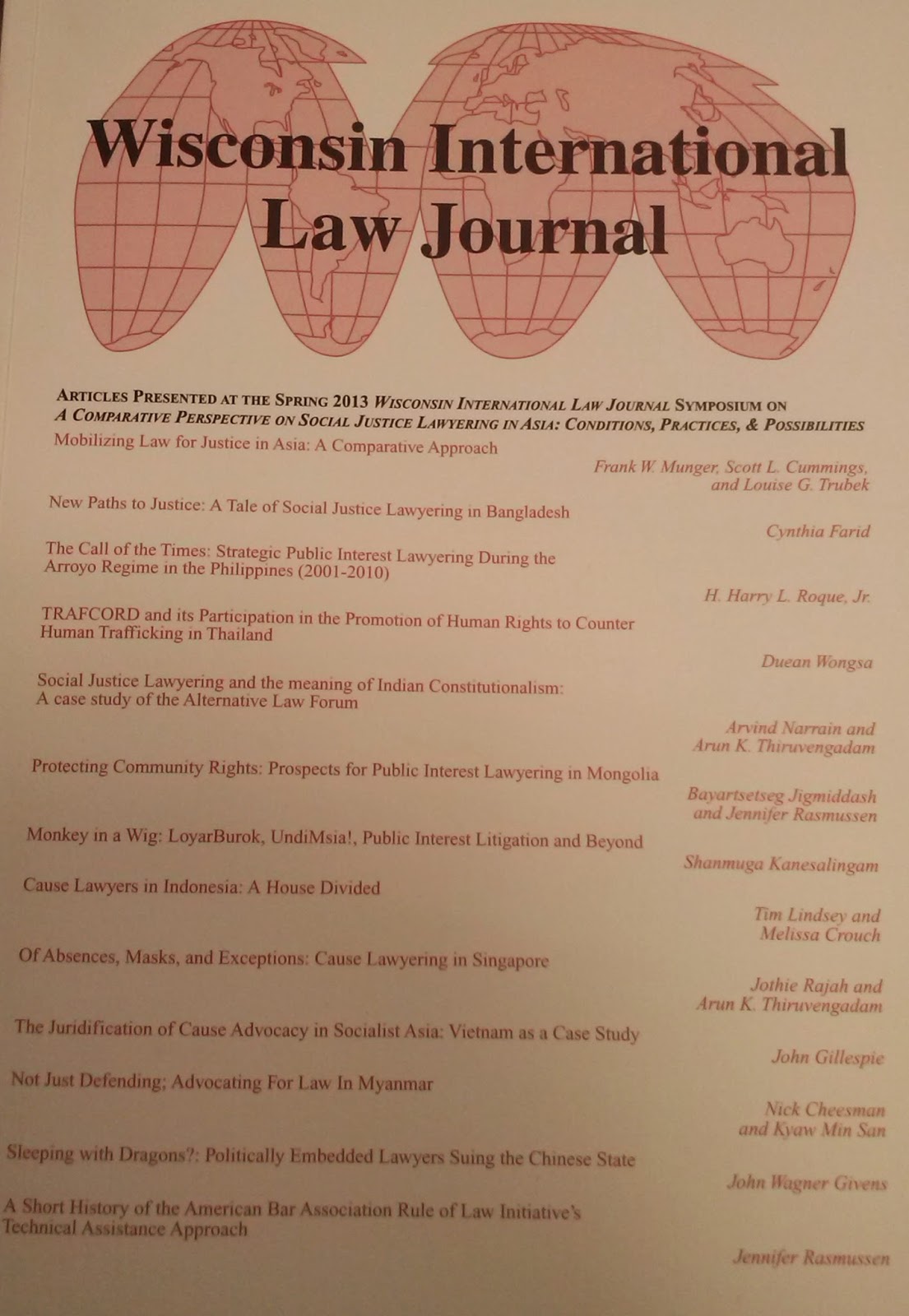
The Wisconsin International Law Journal has recently published a special edition on Cause Lawyers in Asia (Issue 3, Fall 2013). The volume includes the following contributions:

Mobilizing Law for Justice in Asia: A Comparative Approach Frank W. Munger, Scott L. Cummings and Louise G. Trubek|

New Paths to Justice: A Tale of Social Justice Lawyering in Bangladesh Cynthia Farid  

The Call of the Times: Strategic Public Interest Lawyering during the Arroyo Regime in the Philippines (2001-2010)
H. Harry L. Roque

TRAFCORD and Its Participation in the Promotion of Human Rights to Counter Human Trafficking in Thailand Duean Wongsa

Social Justice Lawyering and the Meaning of Indian Constitutionalism: A Case Study of the Alternative Law Forum Arvind Narrain and Arun K  Thiruvengadam

Protecting Community Rights: Prospects for Public Interest Lawyering in Mongolia Bayartsetseg Jigmiddash and Jennifer Rasmussen

Monkey in a Wig: Loyarburok, Undimsia, Public Interest Litigation and beyond Shanmuga Kanesalingam 

Cause Lawyers in Indonesia: A House Divided 
Tim Lindsey and Melissa Crouch

Of Absences, Masks, and Exceptions: Cause Lawyering in Singapore 
Jothie Rajah and Arun K Thiruvengadam

The Jurifidication of Cause Advocacy in Socialist Asia: Vietnam as a Case Study
John Gillespie

Not Just Defending; Advocating for Law in Myanmar 
Nick Cheesman and Kyaw Minn San

Sleeping with Dragons; Politically Embedded Lawyers Suing the Chinese State John
Wagner Givens

A Short History of the American Bar Association Rule of Law Initiative’s Technical Assistance Approach
Jennifer Rasmussen