Principles and Processes of Constitution-making

On 4-5 February 2017, I ran a workshop on ‘Principles and Processes of Constitution-making’ for a select group of participants in Myanmar. The course included discussion on the role and function of a constitution, types of constitutional change, common processes in constitution-making, and public participation in constitutional reform, with reflection on comparative experiences and the case of Myanmar. This workshop was organized as part of a program run by the International Institute for Democracy and Electoral Assistance (International IDEA).

Burmese translation: Tribute to U Ko Ni

[pdf version available here]

ဦးကုိနီသုိ႔ တစ္သီးပုဂၢလ ဂုဏ္ျပဳတမ္းခ်င္း

မလီဆာ ခေရာက္ခ်္ (Melissa Crouch)၊ ဧည့္ေဆာင္းပါးရွင္၊ ဇန္နဝါရီလ ၃၁ရက္၊ ၂၀၁၇ခုနွစ္
တနဂၤေႏြေန႔က ထင္ရွားသည့္ မြတ္စလင္မ္ ေရွ႕ေနတစ္ဦးျဖစ္ၿပီး ေဒၚေအာင္ဆန္းစုၾကည္၏ ဥပေဒအၾကံေပး ဦးကုိနီသည္ လုပ္ၾကံမႈလုိ႔ ယူဆရတဲ့ သတ္ျဖတ္မႈနဲ႔ အေသပစ္သတ္ျခင္း ခံခဲ့ရသည္။ မလီဆာ ခေရာက္ခ်္ (Melissa Crouch)က သူ႔ဘဝ တစ္ေစ့တစ္ေစာင္းနဲ႔ ျမန္မာနုိင္ငံရဲ့ အသိစိတ္ရွိေသာ ဥပေဒေရးရာ အသံတစ္ခု၏ အေမြအႏွစ္အေၾကာင္း ထင္ဟပ္တင္ျပထားပါသည္။
ဤရက္သတၱပတ္အတြင္း ျမန္မာနုိင္ငံမွာ ရွိတဲ့ လူေတြဟာ ျဖစ္လာေတာ့မယ့္ တုိင္းျပည္အမ်ိဳးအစားကုိ မ်က္ေမွာက္ျပဳ ထိပ္တုိက္ေတြ႔ဖုိ႔ တြန္းအားေပးခံၾကရပါၿပီ။ ၂၀၁၇ခုႏွစ္ ဇန္နဝါရီလ ၂၉မွာ ထင္ရွားတဲ့ ေရွ႕ေနတစ္ဦးျဖစ္ၿပီး၊ ေဒၚေအာင္ဆန္းစုၾကည္ရဲ့ ဥပေဒအၾကံေပးလည္းျဖစ္တဲ့ ဦးကုိနီဟာ ရန္ကုန္ အျပည္ျပည္ဆုိင္ရာ ေလဆိပ္မွာ ဝမ္းနည္းေၾကကြဲဖြယ္ရာ လုပ္ၾကံ သတ္ျဖတ္ခံခဲ့ရပါတယ္။ ဦးကုိနီဟာ ျပန္ၾကားေရးဝန္ၾကီး ဦးေဖျမင့္နဲ႔အတူ အင္ဒိုနီးရွားနုိင္ငံ ခရီးကေန ျပန္လာခဲ့တာပါ။ ဦးကုိနီဟာ ဥပေဒျပဳျပင္ေျပာင္းလဲေရးကုိ ရပ္ခံလႈံ႔ေဆာ္ရာမွာ ပြင္းပြင္းလင္းလင္း ေျပာတတ္ၿပီး၊ ဗုဒၶဘာသာ အမ်ားစုေနထုိင္ရာ ျမန္မာနုိင္ငံက လူသိမ်ားတဲ့ မြတ္စ္လင္မ္တစ္ဦးလည္း ျဖစ္ပါတယ္။
သူအခ်ိန္မတန္ခင္ ေသခဲ့ရတာဟာ တုိင္းျပည္အတြက္ေတာ့ ေျပာျပလုိ႔ မရေလာက္တဲ့ ဆုံးရႈံးမႈတစ္ခု ျဖစ္ပါပဲ။
ကိုနီကုိ ၁၉၅၃ခုႏွစ္မွာ စစ္ကုိင္းတုိင္း ကသာျမိဳ႕အနီးအနားမွာ ေမြးဖြားခဲ့ၿပီး၊ အိႏၵိယကလာတဲ့ မြတ္စလင္မ္ အေဖနဲ႔ ဗမာမိခင္တုိ႔ရဲ့ သားျဖစ္ပါတယ္။ ဒီလိုျဖစ္ရပ္မ်ိဳးက အဲဒီအခ်ိန္တုန္းက သိပ္မရွားပါဘူး။ ၁၉၀၀ျပည္လြန္ အေစာပိုင္းႏွစ္ေတြမွာ ျဗိတိသွ်လက္ေအာက္ခံ အိႏၵိယ စစ္တပ္ အလုပ္နဲ႔ သူ႔အေဖ ဗမာျပည္ေရာက္လာခဲ့တယ္။ အဲဒီကာလေတြတုန္းက ဗမာျပည္ဟာ ျဗိတိသွ်ရဲ့ ကုိလုိနီ အင္ပါယာရဲ့ အစိတ္အပုိင္းအျဖစ္ မွတ္ယူၾကတယ္။ သူ႔အေမဟာ မြတ္စလင္မ္ ဖခင္တစ္ဦးနဲ႔ ဗုဒၶဘာသာ မိခင္တုိ႔ရဲ့ သမီးျဖစ္ေပမယ့္လည္း သူမကိုယ္တုိင္ကေတာ့ ဗမာ ဗုဒၶဘာသာ အမ်ိဳးသမီးပါ။
သူၾကီးျပင္းခဲ့တဲ့ ျမိဳ႕ေလးက အိမ္ေထာင္စု ၁၈၀ေလာက္ ဒါမွမဟုတ္ လူဦးေရ ၁၀၀၀ေလာက္သာ ရွိတဲ့ မြတ္စလင္မ္ အသုိက္အဝန္းငယ္ေလးကုိ ဦးကုိနီ သတိရေနေသးတယ္။ ကသာမွာ ေက်ာင္းကုိ ဆုံးခန္းတုိင္ေအာင္ တက္ေရာက္ခဲ့ၿပီး၊ ၁၉၇၀ ျပည္လြန္ အေစာပိုင္းႏွစ္ေတြမွာ တကၠသုိလ္ဝင္တန္း ေအာင္ျမင္ခဲ့ပါတယ္။
ေရွ႕ေနတစ္ေယာက္လုပ္ဖုိ႔ ဘာလုိ႔မ်ား ဆုံးျဖတ္ခဲ့တာလဲလုိ႔ ကြ်န္မက သူ႔ကုိေမးေတာ့၊ သူျပန္ေျဖတာက သူက အျငင္းသန္တဲ့အတြက္ ေရွ႕ေနလုပ္စားပါလားလု႔ိ ေျပာခဲ့တယ္တဲ့။ သူ႔ရဲ့ ထက္ျမက္တဲ့ စကားေျပာစြမ္းရည္ဟာ သူ ခပ္ငယ္ငယ္ကတည္းက အတိအက်ကုိ ဖြံ႔ျဖိဳးေနခဲ့တာပါ။ သူအမွတ္ရေနတတ္တဲ့ တကယ့္ လူၾကီးလူေကာင္းတစ္ဦး ၿပီးေတာ့ ျမိဳ႕မွာ လူရုိေသ ရွင္ရိုေသ ဘဝရခဲ့တဲ့ ေရွ႕ေနတစ္ဦးကုိလည္း သူ ကသာမွာ ဆုံခဲ့ေသးတယ္။ အဲဒီ ပုဂၢိဳလ္ေၾကာင့္ရယ္၊ ၿပီးေတာ့ သူ႔အေမရဲ့ အားေပးမႈေတြေၾကာင့္ သူ ဥပေဒပညာကုိ သင္ယူဆည္းပူးဖုိ႔ သူ စိတ္ဝင္စားခဲ့တယ္။
၁၉၇၀ ျပည့္လြန္ႏွစ္ အေစာပိုင္းမွာ ရန္ကုန္တကၠသုိလ္ တက္ေရာက္ခဲ့တယ္။ ေက်ာင္းသားေတြအတြက္ တကၠသုိလ္ဝင္းထဲက အေဆာင္တစ္ခုျဖစ္တဲ့ အင္းဝေဆာင္မွာ သူေနၿပီး ေက်ာင္းတက္ခဲ့တယ္။ ေလးႏွစ္တက္ရတဲ့ ဘီေအဘြဲ႔ရခဲ့ၿပီး၊ တစ္ႏွစ္တက္ရတဲ့ ဥပေဒ သင္တန္း(LLB)ကုိ ဆက္လက္ သင္ယူခဲ့တယ္။ ဒီလုိ သင္ယူမႈက အဲဒီအခ်ိန္တုန္းက ဥပေဒပညာ သင္ယူခ်င္သူေတြ သြားရတဲ့ လမ္းေၾကာင္းတစ္ခုပါ။ ဘီေအတန္းမွာတုန္းက ေက်ာင္းသား အေယာက္ ၁၈၀ေလာက္ ရွိတဲ့အထဲမွာမွ ၅၀-၆၀ေလာက္က မိန္းကေလးေတြ။ သူႏွစ္ျခိဳက္တဲ့ ဘာသာရပ္က တရားမ ဥပေဒနဲ႔ သက္ေသခံ ဥပေဒတုိ႔ပါပဲ။ ဦးတင္အုန္းကေတာ့ သူသေဘာက်တဲ့ ပါေမာကၡ၊ ဥပေဒဌာန ဌာနမွဴး။
အားက်ေလးစားခဲ့တဲ့ သတ္သတ္မွတ္မွတ္ ပါေမာကၡတစ္ေယာက္ေယာက္မ်ား ရွိခဲ့သလားလုိ႔ ေမးၾကည့္ေတာ့၊ ဆရာႏွစ္မ်ိဳးႏွစ္စားအေၾကာင္း သူျပန္ေျပာင္း ေျပာျပခဲ့ေသးတယ္။ အဲဒီ ဆရာေတြဟာ အျမဲတမ္း အခ်ိန္ျပည့္ ဝန္ထမ္းေတြျဖစ္ၿပီး၊ အမ်ားစုက အမ်ိဳးသမီးေတြ။ ေက်ာင္းသားေတြက ဒီဆရာမေတြရဲ့ ျမႈပ္ႏွံမႈနဲ႔ ေက်ာင္းသားေတြအေပၚ မေမာစတမ္း တာဝန္ေက်မႈေတြေၾကာင့္ ေက်ာင္းသားေတြက ေလးစားျမတ္နုိးရတဲ့ ဆရာမေတြ။ တျခား ကထိကအမ်ိဳးအစားေတြကေတာ့ အခ်ိန္ပိုင္းေတြ ျဖစ္ၿပီးေတာ့၊ အဲဒီထဲမွာ နာမည္ေက်ာ္ ေရွ႕ေနၾကီးေတြ၊ ပင္စင္စား တရားသူၾကီးေတြ ဒါမွမဟုတ္ ေက်ာင္းသားေတြကို ပုိ႔ခ်ေပးဖုိ႔ အခ်ိန္ေပးတဲ့ ေရွ႕ေနခ်ဳပ္ရုံးက အျငိမ္းစား အရာရွိၾကီးေတြပါ။
ဆုိရွယ္လစ္ အစုိးရက ၁၉၇၄ အေျခခံဥပေဒကုိ စက်င့္သုံးေတာ့ ဦးကုိနီက စတုတၳႏွစ္ေက်ာင္းသား။ ဆုိရွယ္လစ္ အေျခခံဥပေဒမူၾကမ္းကုိ အတည္ျပဳဖုိ႔ ၁၉၇၂ ျပည္သူ႔ဆႏၵခံယူပြဲကုိ သူျပန္မွတ္မိေနေသးတယ္။ သူမွတ္မိသေလာက္ေတာ့၊ ေက်ာင္းသားအမ်ားစုက ပါလီမန္ ဒီမုိကေရစီ စနစ္ကေန၊ တစ္ပါတီစနစ္၊ လႊတ္ေတာ္တစ္ရပ္စနစ္နဲ႔ ဆုိရွယ္လစ္ စစ္တပ္အုပ္စုိးတဲ့ နုိင္ငံဆီ ေျပာင္းသြားေစမယ့္ ဒီအေျခခံဥပေဒ မူၾကမ္းၾကီးကုိ ဆန္႔က်င္ ကန္႔ကြက္ခဲ့ၾကတယ္။ ကန္႔ကြက္မဲ အတြက္ အမဲေရာင္ပုံး၊ ေထာက္ခံမဲအတြက္ အျဖဴေရာင္ပုံးေတြပါတဲ့ မဲရုံေတြကုိ မဲေပးတဲ့ေန႔မွာ ေက်ာင္းဝင္းတစ္ဝိုက္မွာ ေဆာက္ထားတာကုိ သူမွတ္မိေနတယ္။ ေက်ာင္းသားေတာ္ေတာ္မ်ားမ်ားက သူတုိ႔ရဲ့ မဲေတြကုိ အမည္းေရာင္ပုံးထဲ ထည့္ခဲ့ၾကတယ္။ ဒါေပမယ့္လည္း ညေနခင္းက်ေတာ့ ေက်ာင္းသားအမ်ားစုဟာ ၁၉၇၄ အေျခခံဥပေဒကုိ ေထာက္ခံမဲေပးခဲ့ၾကတယ္လုိ႔ ဆုိရွယ္လစ္ အစုိးရက ေၾကညာခဲ့တယ္။ အဲဒါကေတာ့ ေျဗာင္အမွားၾကီးဗ်လုိ႔ သူေျပာျပခဲ့တယ္။
ဘြဲ႔ရၿပီးေတာ့ သူဘာလုပ္ရမလဲလုိ႔ စဥ္းစားေနတဲ့ အခ်ိန္မွာ၊ တကၠသိုလ္ ဆရာတစ္ေယာက္က တကၠသုိလ္က ကထိက တစ္ျဖစ္လဲ နာမည္ေက်ာ္ ရာဇဝတ္မႈလုိက္ ေရွ႕ေနၾကီး ဦးကုိယုဆီမွာ လုပ္ဖုိ႔ အၾကံျပဳခဲ့တယ္။ ၁၉၇၀ျပည့္လြန္ ေနာက္ပုိင္းႏွစ္ေတြမွာ သူအဲဒါပဲ လုပ္ေနခဲ့တယ္။ သူ႔အေပၚမွာ ရွိတဲ့ ဦးကုိယုရဲ့ ၾသဇာၾကီးတဲ့ လႊမ္းမုိးမႈကုိ အမွတ္ရေနတယ္။ ဦးကုိယုဆီက သူသင္ယူခဲ့တာ နွစ္ခုကေတာ့ စာဘယ္လုိ သင္ရသလဲနဲ႔ ေရွ႕ေနေကာင္းတစ္ေယာက္ ျဖစ္ေအာင္ ဘယ္လုိ လုပ္ရသလဲ ဆုိတာပါ။
သူ႔ရဲ့ အလုပ္သင္ဆရာ ဦးကုိယုက ၁၉၈၈ခုႏွစ္ ဒီမုိကေရစီ အုံၾကြမႈၾကီးနဲ႔ ပတ္သက္ၿပီး ဘားေကာင္စီရဲ့ ေၾကညာခ်က္ကုိ ေရးသားခဲ့သူျဖစ္သလုိ၊ အမ်ိဳးသားဒီမုိကေရစီ အဖြဲ႔ခ်ဳပ္ရဲ့ ဗဟုိ အလုပ္အမႈေဆာင္ အဖြဲ႔ရဲ့ အဖြဲ႔ဝင္ တစ္ေယာက္လည္း ျဖစ္ခဲ့ပါေသးတယ္။ ဦးကုိနီရဲ့ နုိင္ငံေရး အေတြးအျမင္ေတြအေပၚ ဦးကုိယုရဲ့ စံနမူနာေတြက ဘယ္ေလာက္မ်ား လႊမ္းမုိးခဲ့သလဲလုိ႔ ကြ်န္မ ဘယ္ေတာ့မွ မေမးခဲ့ပါဘူး။ ဦးကုိနီ အထက္တန္းေရွ႕ေနျဖစ္လာၿပီး၊ ၁၉၇၈ခုႏွစ္မွာ ရန္ကုန္ေရွ႕ေနအသင္းမွာ အဖြဲ႔ဝင္တစ္ဦး ျဖစ္လာခဲ့တယ္။ အဲဒီကာလအေတာအတြင္းမွာ ဦးကုိနီက ရန္ကုန္ အေဝးသင္တကၠသုိလ္မွာ ဆရာတစ္ဦးအျဖစ္လည္း လုပ္ခဲ့ပါေသးတယ္။ ဦးေမာင္ေမာင္ေအးတုိ႔လုိ ဝါရင့္ ေရွ႕ေနၾကီးေတြဆီက အနီးကပ္ သင္ယူခဲ့တာေတြကို သူမွတ္မိေနတယ္။
၁၉၈၈မတုိင္ခင္မွာ၊ သူ ဦးကုိယုဆီက ေျပာင္းၿပီးေတာ့ သူ႔ကုိယ္ပုိင္ ရုံးခန္းက်ဥ္းေလး ဖြင့္ခဲ့တယ္။ သူအဓိက အာရုံစုိက္ လုပ္ခဲ့တာကေတာ့ တရားမ ဥပေဒပါ။ ၁၉၉၄မွာ၊ ေရွ႕ေန (၇)ေယာက္နဲ႔ Laurel Law Firmကို တည္ေထာင္ခဲ့တယ္။ သူက အရမ္းကုိ လူသိမ်ား ေက်ာ္ၾကားတဲ့ တရားလႊတ္ေတာ္ ေရွ႕ေန (အၾကီးတန္းေရွ႕ေန)၊ အလုပ္သင္ဆရာ ျဖစ္လာေတာ့မွာပါ။ ၂၀၁၄ခုႏွစ္မွာ သူၾကီးၾကပ္ခဲ့တဲ့ အလုပ္သင္ေရွ႕ေန ၁၀၀ေက်ာ္သြားၿပီလုိ႔ ကြ်န္မကုိ ေျပာျပခဲ့တယ္။
ျမန္မာ စစ္တပ္ရဲ့ ရက္ရက္စက္စက္ ေခ်မႈန္းခံခဲ့ရတဲ့ ဒီမုိကေရစီ အုံၾကြမႈၾကီးျဖစ္ခဲ့တဲ့ ၁၉၈၈ အေၾကာင္း ကြ်န္မတုိ႔ အနည္းအက်ဥ္းပဲ ေျပာျဖစ္ခဲ့တယ္။ ေနာက္ပုိင္းမွာ စစ္အစုိးရရဲ့ ပိတ္ပင္တာ ခံခဲ့ရတဲ့ နုိင္ငံေရးပါတီတစ္ခုမွာ အဲဒီအခ်ိန္က သူပါဝင္ခဲ့တာေတြကုိေတာ့ ကြ်န္မကုိ တစ္ခါက ေျပာျပခဲ့တယ္။ အဲဒီအခ်ိန္မွာ ကေလးငယ္ေတြရွိေနခဲ့ၿပီးေတာ့ ဖခင္တစ္ေယာက္အေနနဲ႔ စီးပြားရွာဖုိ႔၊ မိသားစုကုိ ေစာင့္ေရွာက္ဖုိ႔ တာဝန္ရွိတယ္လုိ႔ ခံစားခဲ့တဲ့အေၾကာင္း ေျပာျပဖူးတယ္။
ဦးကုိနီဟာ မီဒီယာေပၚမွာ ဥပေဒေရးရာနဲ႔ ပတ္သက္ၿပီး သုံးသပ္ေျပာၾကားသူ ျဖစ္ခဲ့ၿပီး၊ ေရွ႕ေနငယ္ေလးေတြကေနစၿပီး၊ လႊတ္ေတာ္ အမတ္ၾကီးေတြအထိ မတူတဲ့ ပရိသတ္ေတြကုိ ပုိ႔ခ်ခဲ့တယ္။ ဖြဲ႔စည္းပုံအေျခခံဥပေဒ ျပင္ဆင္ေျပာင္းလဲေရးအတြက္ လိုအပ္ခ်က္ကေန စၿပီးေတာ့၊ ျငိမ္းခ်မ္းစြာ ဆႏၵျပပုိင္ခြင့္၊ ျပႆနာၾကီးလွတဲ့ အမုန္းစကား ျပႆနာေတြအထိ ဥပေဒ ကိစၥျပႆနာေတြနဲ႔ ပတ္သက္ၿပီး ပြင့္ပြင့္လင္းလင္း ေျပာတတ္သူ တစ္ေယာက္ပါ။ အစုိးရ အဆုိျပဳတဲ့ ဟုိတယ္တစ္ခုအျဖစ္ ေျပာင္းလဲသြားမယ္လုိ႔ ေကာလဟလ ထြက္ေနတဲ့ ဟုိက္ကုတ္ (High Court)အေဆာက္အဦးနဲ႔ ပုလိပ္ ေကာ္မရွင္နာ ရုံးတုိ႔ကုိ ေရာင္းခ်ျခင္းကုိ ဆန္႔က်င္ကန္႔ကြက္ဖုိ႔ ဆႏၵျပခဲ့ၾကတဲ့ ေရွ႕ေနေတြနဲ႔လည္း ပူးေပါင္းပါဝင္ခဲ့တယ္။
ေဒၚေအာင္ဆန္းစုၾကည္ သမၼတမျဖစ္ေအာင္ တားျမစ္ထားတယ္လို႔ မွတ္ယူၾကတဲ့ ဖြဲ႔စည္းပုံအေျခခံဥပေဒ ပုဒ္မ ၅၉(စ)ကုိ လႊတ္ေတာ္က ဆုိင္းငံ့ထားနုိင္တယ္ဆုိတဲ့ အျမင္ရွိခဲ့သူပါ။ ၁၉၄၇ဖြဲ႔စည္းပုံအေျခခံဥပေဒရဲ့ ျပဌာန္းခ်က္ တစ္ရပ္ကုိ ဆုိင္းငံ့ထားခဲ့ဖူးတဲ့ ၁၉၅၀ ျပည့္လြန္ႏွစ္ေတြကေန ရွိခဲ့တဲ့ ဖြဲ႔စည္းပုံအေျခခံဥပေဒဆုိင္ရာ ျပႆနာေတြအေပၚ သူ႔ရဲ့ နက္နက္ရႈိင္းရႈိင္း နားလည္မႈကုိ ျပသမႈ တစ္ခုပါ။
ဒါေပမယ့္လည္း သူဟာ မြတ္စလင္မ္ တစ္ေယာက္ျဖစ္တယ္ဆုိတဲ့ အခ်က္ကေနေတာ့ သူမလြတ္ေျမာက္နုိင္ခဲ့ပါဘူး။ ၂၀၁၂ခုနွစ္ကေန စၿပီးေတာ့ မြတ္စလင္မ္ မုန္းတီးေရး အၾကမ္းဖက္မႈေတြက ရခုိင္ျပည္နယ္ကေန ျမန္မာနုိင္ငံရဲ့ အဓိက ျမိဳ႕ၾကီးေတြဆီ ကူးစက္လာခဲ့ပါတယ္။ ဒီထက္ပုိတဲ့ မြတ္စလင္မ္ မုန္းတီးစိတ္ေတြကုိ လႈံ႔ေဆာ္တဲ့ ရက္ဒီကယ္ ဗုဒၶဘာသာ လႈပ္ရွားမႈ အသစ္တစ္ရပ္ ေပၚထြန္းလာခဲ့တယ္။ ဒီေနာက္ခံအေျခအေနမွာ ျမန္မာနုိင္ငံက ဦးကုိနီ အပါအဝင္ မ်ားစြာေသာ မြတ္စလင္မ္ေတြအတြက္ တစ္စထက္တစ္စ ခက္ခဲလာၿပီး၊ နုိင္ငံေရးမႈိင္းတုိက္ခံခဲ့ရတာပါ။
၂၀၁၄ခုႏွစ္ ေဖေဖာ္ဝါရီလမွာ ဘုန္းၾကီးေတြက ဦးကုိနီနဲ႔ တျခား မြတ္စလင္မ္တစ္ေယာက္ကုိ ေဟာေျပာခြင့္ မျပဳသင့္ဘူးလုိ႔ ေတာင္းဆုိခဲ့ၿပီးေနာက္မွာ ေျမာက္ဥကၠလာပ ျမိဳ႕နယ္က အမ်ိဳးသားဒီမုိကေရစီအဖြဲ႔ခ်ဳပ္ စာေပေဟာေျပာပြဲတစ္ခုမွာ ဦးကုိနီ မေဟာေျပာဖုိ႔ ပိတ္ပင္ခံခဲ့ရပါတယ္။
၂၀၁၅ခုႏွစ္အတြင္း ျမန္မာနုိင္ငံရဲ့ သမုိင္းဝင္ ေရြးေကာက္ပြဲ မတုိင္ခင္ ကာလေတြမွာ မြတ္စလင္မ္ အသုိက္အဝန္း အထူးသျဖင့္ ရခုိင္ျပည္နယ္က ရုိဟင္ဂ်ာေတြအတြက္ ပုိဆုိးတဲ့ အေျခအေနေတြဆီ ေျပာင္းလဲလာခဲ့တယ္။ အျဖဴေရာင္ကဒ္ ကုိင္သူေတြ(ယာယီမွတ္ပုံတင္ကတ္ ကုိင္သူေတြ)က ေရြးေကာက္ပြဲမွာ ဝင္အေရြးခံဖုိ႔ေရာ၊ မဲေပးျခင္းကေနေရာ ပိတ္ပင္ခံရတယ္။ အျဖဴေရာင္ ယာယီကဒ္ ကိုင္သူေတြကုိ ၁၉၉၀ ေရြးေကာက္ပြဲနဲ႔ ၂၀၁၀ ေရြးေကာက္ပြဲေတြမွာ မဲေပးခြင့္၊ ေရြးေကာက္ပြဲမွာ ဝင္ျပိဳင္ခြင့္ ျပဳခဲ့ဖူးတဲ့အတြက္ နုိင္ငံေရး လက္ေတြ႔က်င့္သုံးမႈ အမူအက်င့္ေတြနဲ႔ ဆန္႔က်င္ေနခဲ့တယ္။ ဖြဲ႔စည္းပုံအေျခခံဥပေဒဆုိင္ရာ ခုံရုံးရဲ့ ဒီကိစၥအေပၚ ဆုံးျဖတ္ခ်က္ကုိ ဦးကုိနီက ေဝဖန္ခဲ့တယ္။
ဒါေတြအျပင္ မြတ္စလင္မ္ တစ္ဦးတစ္ေယာက္ကိုမွ် အမတ္ေလာင္းအျဖစ္ မတင္သြင္းဖုိ႔နဲ႔ ပါတီ ဗဟုိအလုပ္အမႈေဆာင္အဖြဲ႔ထဲမွာ မြတ္စလင္မ္ တစ္ဦးတစ္ေယာက္မွ် မခန္႔အပ္ဖုိ႔ ပါတီက ဆုံးျဖတ္ခဲ့တယ္လုိ႔ သူရႈျမင္ခဲ့တဲ့အေပၚမွာ အမ်ိဳးသားဒီမုိကေရစီအဖြဲ႔ခ်ဳပ္ကုိ ျပတ္ျပတ္သားသား ေဝဖန္ခဲ့ေသးတယ္။ အဲဒီအခ်ိန္တုန္းက ဒီကိစၥနဲ႔ ပတ္သက္ၿပီး သူေျပာတုန္းက ျဖစ္ခဲ့တဲ့ နက္နက္ရႈိင္းရႈိင္း စိတ္ပ်က္ ေဒါသထြက္ရမႈေတြကုိ သူအမွတ္ရေနတယ္။ ရက္ဒီကယ္ ဗုဒၶဘာသာ ဘုန္းၾကီးေတြရဲ့ ျခိမ္းေျခာက္တဲ့ နည္းဗ်ဴဟာ စနက္ေၾကာင့္ ျဖစ္ခဲ့ရတာဆုိတာကုိ သူနည္းနည္းမွ သံသယမရွိခဲ့ဘူး။
နုိင္ငံတကာ မီဒီယာေတြက သူ႔ကုိ ‘မြတ္စလင္မ္ ေရွ႕ေန’တစ္ေယာက္အျဖစ္၊ အမ်ိဳးသား ဒီမုိကေရစီ အဖြဲ႔ခ်ဳပ္ရဲ့ ဥပေဒအၾကံေပးတစ္ေယာက္အျဖစ္ သတ္မွတ္ ေခၚေဝၚေနၾကေပမယ့္၊ ဒီထက္အမ်ားၾကီးပုိတဲ့ အရာေတြနဲ႔ သူ႔ကုိ အမွတ္ရေနဖုိ႔လုိတယ္။ သူ႔ကုိယ္သူ လြတ္လပ္အမွီခုိကင္းသူ အျဖစ္ ရႈျမင္တာကုိ အထူးျပဳေျပာတတ္တာကုိ ကြ်န္မ ခဏခဏ သတိရေနတယ္။ အမ်ိဳးသား ဒီမုိကေရစီ အဖြဲ႔ခ်ဳပ္ဟာ သိပ္မၾကာခင္ ႏွစ္ေတြထဲမွာ ရက္ဒီကယ္ ဗုဒၶဘာသာ အဖြဲ႔ေတြရဲ့ ဖိအားေအာက္ မလႈပ္ႏိုင္ေအာင္ ျဖစ္လာတဲ့အခါမွာ သူ႔ရဲ့ အမွီခုိကင္းလြတ္လပ္မႈအေၾကာင္းကုိ ပုိပိုၿပီး အာရုံစုိက္ အေလးနက္ထားလာတယ္။
ဦးကုိနီဟာ ၂၀၁၃ခုႏွစ္ကေန အခုခ်ိန္ထိ လုပ္လာတဲ့ ဖြဲ႔စည္းပုံအေျခခံဥပေဒဝါဒနဲ႔ ပတ္သက္တဲ့ Australia-Myanmar Constitutional Democracy Projectရဲ့ အခမ္းအနားကုိ ပုံမွန္တက္ေရာက္သူ တစ္ေယာက္ပါ။ တကယ္ေတာ့ ဒီစီမံကိန္းအတြင္း သင္ယူမႈက တစ္လမ္းသြားမဟုတ္ဘဲ အျပန္အလွန္ သင္ယူၾကျခင္း ျဖစ္ပါတယ္။ သူကြ်န္မတုိ႔အတြက္ ေပးခဲ့တဲ့ အခ်ိန္ေတြအတြက္ ေလးေလးနက္နက္ကုိ သူ႔ကုိ ေက်းဇူးေၾကြးတင္ေနပါတယ္။ ဖြဲ႔စည္းပုံအေျခခံဥပေဒဝါဒနည္းက် ဒီမုိကေရစီနဲ႔ ပတ္သက္တဲ့ ကြ်န္မတို႔ရဲ့ အလုပ္ရုံေဆြးေႏြးပြဲေတြမွာ သူ႔ရဲ့ တတ္ေျမာက္ကြ်မ္းက်င္မႈက တုိင္းတာလုိ႔ မရေလာက္ေအာင္ အေထာက္အပံ့ ျဖစ္ေစခဲ့ပါတယ္။ သူ႔ရဲ့ စိတ္ရွည္ သည္းခံမႈနဲ႔ ကြ်န္မတုိ႔ရဲ့ အားထုတ္မႈေတြအေပၚ ေထာက္ခံကူညီေပးမႈေတြက တကယ္စိတ္ရင္းနဲ႔ ေက်နပ္နွစ္သက္စရာပါ။
ဒီနွစ္ေတြအၾကာၾကီးထဲမွာ၊ ေရွ႕ေနအဖြဲ႔အစည္း ေတာ္ေတာ္မ်ားမ်ားနဲ႔ မူဝါဒအတြက္ ရပ္ခံတင္ျပမႈကိစၥေတြအေပၚ သူ႔ရဲ့ အကူအညီေတြ စီးဆင္းခဲ့ပါတယ္။ သိပ္မၾကာခင္ ကာလကစၿပီးေတာ့ ျမန္မာမြတ္စလင္မ္ ေရွ႕ေနမ်ား အသင္းမွာ ပုိၿပီး ထဲထဲဝင္ဝင္ ပါဝင္ခဲ့တယ္။ ဒီလုိ ပါဝင္လာခဲ့တာဟာ လုိအပ္ခ်က္ကုိ သိျမင္လာလုိ႔၊ မြတ္စလင္မ္ေတြရဲ့ အေျခခံအခြင့္အေရးေတြကုိ ကာကြယ္ေပးဖုိ႔ လုိအပ္မႈေၾကာင့္ လုိ႔ ထင္ရပါတယ္။
၂၀၁၆ ၾသဂုတ္လတုန္းက လက္ရွိအေျခအေနေတြနဲ႔ ပတ္သက္ၿပီး ကြ်န္မ သူ႔ကုိ ဖုန္းနဲ႔ စကားေျပာတဲ့အခ်ိန္မွာေတာ့ သူက ဒီအေျခအေနေတြအေပၚ စုိးရိမ္မႈေတြ ရွိေနခဲ့တယ္။ အရမ္းကို အေရးၾကီးတဲ့ ျပည္သူေတြရဲ့ အႏၱရယ္ကင္းေရး၊ လူ႔အခြင့္အေရးနဲ႔ လုံျခံဳေရးနဲ႔ ပတ္သက္တဲ့ သူ႔ရဲ့ စုိးရိမ္ပူပန္မႈေတြအေၾကာင္း ေျပာေနတဲ့ သိပ္ကို အဆုိးျမင္လြန္းတဲ့ ခံစားမႈေလသံမ်ိဳး ကြ်န္မ တစ္ခါမွ သူ႔ဆီက မၾကားဘူးဘူး။ ဖြဲ႔စည္းပုံအေျခခံ ဥပေဒကိစၥေတြ၊ လူအခြင့္အေရး ျပႆနာကိစၥေတြနဲ႔ ပတ္သက္ၿပီး၊ အမ်ားျပည္သူတက္ေရာက္တဲ့ ဖုိရမ္ေတြမွာ ျမန္မာျပည္တြင္းေနသူေတြ ေျပာရဆုိရတာက သိပ္အႏၱရယ္မကင္းေတာ့ဘူး မလုံျခဳံေတာ့ဘူးလို႔ သတိေပးခဲ့တယ္။ ဒါေပမယ့္လည္း ခုလုပ္ေနတာေတြကုိ ဆက္လုပ္ဖုိ႔လည္း ကြ်န္မတုိ႔ကုိ အားေပးခဲ့တယ္။
၂၀၁၆ နုိဝင္ဘာမွာ ကြ်န္မရဲ့ လုပ္ေဖာ္ကုိင္ဖက္ေတြနဲ႔အတူ ကြ်န္မတုိ႔ ဦးကုိနီရဲ့ သူ႔ရုံးခန္းအသစ္ကုိ သြားလည္ပတ္ခဲ့တယ္။ ကြ်န္မတုိ႔ကုိ ၾကိဳဆုိရတာ သူသိပ္ဂုဏ္ယူေနတယ္။ ၿပီးေတာ့ အဲဒီေန႔က ဖြဲ႔စည္းပုံအေျခခံဥပေဒဆုိင္ရာ ျပႆနာ အမ်ားၾကီးကုိ အၾကာၾကီး ေျပာျဖစ္ခဲ့တယ္။
ဦးကုိနီလုိ ၾကီးက်ယ္ခမ္းနားတဲ့ ဥပေဒ ဉာဏ္ၾကီးရွင္ဆီမွာ ေလးစားျမတ္နုိးစြာ သင္ယူခြင့္ရခဲ့တာ ဂုဏ္ယူဖြယ္ အခြင့္ထူး တစ္ခုပါ။ ကြ်န္မ ရွာေနမွန္းသိတဲ့ စာအုပ္ေတြကုိ သူ႔အလုပ္ေတြ ၾကားထဲက ကြ်န္မအတြက္ တစ္ခါထက္မက ဝယ္ေပးခဲ့တယ္။
ဦးကုိနီနဲ႔ ပတ္သက္ၿပီး ေျပာစရာေတြက အမ်ားၾကီးပါ။ သူဟာ မိသားစုအေပၚ သိတတ္ တာဝန္ေက်သူ၊ ခင္ပြန္း၊ ဖခင္၊ ၿပီးေတာ့ အဖုိးတစ္ေယာက္ပါ။ သူ႔သားသမီးေတြရဲ့ အနာဂတ္အတြက္သာ စုိးရိမ္ပူပန္တတ္တာ မဟုတ္ဘူး။ တုိင္းျပည္ရဲ့ အနာဂတ္အတြက္ပါ ရတက္မေအးရွာခဲ့သူပါ။
Islam and the State in Myanmarဆုိတဲ့ စာအုပ္တဲ့ ျပင္ဆင္ေနတုန္းမွာ၊ ျမန္မာ့ သမုိင္းကုိ ခမ္းခမ္းနားနား ၾကီးက်ယ္ေစခဲ့တဲ့ အတိတ္က ျမန္မာမြတ္စလင္မ္ အထင္ကရ ပုဂၢိဳလ္ေတြအေၾကာင္း ကြ်န္မ အက်ဥ္းေရးသားခဲ့တယ္။ ဥပမာ ဦးရာရွစ္ (ဆုိရွယ္လစ္ေခတ္အတြင္း ႏွစ္ရွည္ ေထာင္ဒဏ္ ႏွစ္ၾကိမ္ မခံရခင္ ၁၉၄၈-၁၉၆၂အတြင္း ပါလီမန္ ဒီမုိကေရစီေခတ္ ကာလအတြင္းမွာ အစုိးရအဖြဲ႔ ေနရာေတြ ထမ္းေဆာင္ခဲ့သူ)တုိ႔လုိ၊ ဦးရာဇတ္ (၁၉၄၇ခုႏွစ္ ဇူလုိင္လ ၁၉ရက္ေန႔မွာ ဗိုလ္ခ်ဳပ္ေအာင္ဆန္းနဲ႔ အတူ လုပ္ၾကံခံခဲ့ရသူ)တုိ႔လုိ ပုဂၢိဳလ္မ်ိဳးေတြေပါ့။
ျမန္မာနုိင္ငံ ဒီမုိကေရစီ အသြင္ကူးေျပာင္းေရး ကာလမွာ အေရးပါတဲ့ အသံတစ္သံ ျဖစ္လာခဲ့ေပမယ့္လည္း ဦးကုိနီတုိ႔လုိ ေခတ္ျပိဳင္ ပုဂၢိဳလ္မ်ိဳးေတြကုိေတာ့ မေဖာ္ျပခဲ့ပါဘူး။ ေနာက္ပုိင္း မ်ားစြာအတြက္ ျမန္မာနုိင္ငံရဲ့ ဥပေဒျပဳျပင္ေျပာင္းလဲေရးအတြက္ အသံတစ္သံ ျဖစ္ေနဦးမယ့္ သူတစ္ေယာက္အတြက္ ဂုဏ္ျပဳတမ္းခ်င္းစာ တစ္ေစာင္ ေရးဖုိ႔ အရမ္းအရမ္း ေစာလြန္းေသးတယ္ ထင္ပါတယ္။
ျမန္မာ့ သမုိင္းထဲက ၾကီးက်ယ္ခမ္းနားတဲ့ ဥပေဒဉာဏ္ၾကီးရွင္ေတြ၊ ျပည္သူသိ မြတ္စလင္မ္ အထင္ကရ ပုဂၢိဳလ္ၾကီးေတြနဲ႔အတူ ဦးကုိနီကုိ သတိရေနဖုိ႔ လုိပါတယ္။ ဦးကုိနီဟာ ဆယ္စုႏွစ္နဲ႔ ခ်ီတဲ့ စစ္အုပ္ခ်ဳပ္ေရးေအာက္က ထြက္ေျမာက္လာတဲ့ ဗုဒၶဘာသာအမ်ားစု တုိင္းျပည္တစ္ခုထဲမွာ ပြင့္ပြင္းလင္းလင္း ေျပာဆုိမႈေတြကေန ရလာနုိင္တဲ့ ပုဂၢိဳလ္ေရး အႏၱရယ္ေတြကုိ သိခဲ့တဲ့ ေလးစားတန္ဖုိးထားခံရတဲ့ ဥပေဒအၾကံေပး ပုဂၢိဳလ္ေက်ာ္တစ္ဦးပါ။
အခုေတာ့ ဦးကုိနီလုိ ေျပာရဲဆုိရဲ အသံေတြ ျမန္မာနုိင္ငံမွာ အမ်ားၾကီး အျမဲတမ္းထက္ ပိုလုိအပ္ေနပါၿပီ။
ေဒါက္တာ မလီဆာ ခေရာက္ခ်္၊ အၾကီးတန္း ကထိက၊ University of New South Wales. ဤ ႏႈတ္ဆက္ဂုဏ္ျပဳစာကုိ လြန္ခဲ့တဲ့ ႏွစ္အနည္းငယ္အတြင္းက ဦးကုိနီနဲ႔ ျပဳလုပ္ခဲေသာ ခေရေစ့တြင္းက် ကြင္းဆင္း အင္တာဗ်ဴးမ်ားအား အသံသြင္းထားျခင္းႏွင့္ ၊ မွတ္စုမ်ားအေပၚ အေျခခံ ေရးသားပါသည္။

This article was first published in English at New Mandala on 31 January 2017, http://www.newmandala.org/personal-tribute-u-ko-ni/

A personal tribute to U Ko Ni

This was first published at New Mandala, 31 January 2017.

On Sunday, prominent Muslim lawyer, and legal adviser to Aung San Suu Kyi, U Ko Ni, was fatally shot by an alleged assassin. Melissa Crouch reflects on the life and legacy of Myanmar’s legal voice of conscience.

This week people in Myanmar were forced to confront the kind of country that it is becoming. On 29 January 2017, U Ko Ni, a prominent lawyer and legal advisor, was tragically assassinated at Yangon International Airport. He was returning from a trip to Indonesia with the Information Minister U Pe Myint. U Ko Ni was outspoken in his advocacy for law reform and was also a well-known Muslim in majority-Buddhist Myanmar.


His untimely death is an unspeakable loss for the country.


Ko Ni was born near Katha in Saigang Division in 1953, and was the son of a Muslim father and a Burmese Buddhist mother. This was not unusual for the time. In the early 1900s, his father came to Burma through his work with the British Indian army. Burma at the time was considered to be part of the British Indian colonial empire. His mother was a Burmese Buddhist, although she herself was also the daughter of a Muslim father and a Buddhist mother.


In the town where he grew up, he recalls a small Muslim community, of perhaps 180 families or 1,000 people. He completed his schooling in Katha and passed his matriculation by the early 1970s. His schooling was in Burmese (not English) because this was largely during the socialist period.


When I asked him why he decided to become a lawyer, his response was that his mother told him to become one because he was good at arguing. His great oratory skills were clearly developing at an early age. He also met a lawyer in Katha who he recalls was a true gentleman and who had earned the respect of many people in town. He became interested in studying law because of this man and the encouragement of his mother.


Ko Ni entered Yangon University in the early 1970s. He resided at Ava Hall, one of the dormitories on campus for students. He completed a four-year BA degree and then a one year LLB course, as was the common path to study law at the time. There were about 180 students in his BA course, and about 50-60 of them were women. His favourite subjects were civil law and evidence. He said that his favourite professor was U Tin Ohn, the Head of Department.


When asked about whether particular professors were an inspiration to him, he recalls two kinds of teachers. There were the permanent staff, most of them women, who were admired by the students for their dedication and tireless service to their students. The other type of lecturers were part-time and included many famous lawyers, retired judges or retired officials from the Attorney General’s Office who gave up their time to lecture to students.


U Ko Ni was in his fourth year of study when the socialist government introduced the 1974 Constitution. He recalls the 1972 referendum to approve the draft socialist constitution. From his memory, most of the students objected to the draft Constitution that would see the country shift from parliamentary democracy to a one-party, unicameral parliament and socialist-military state. On the day of voting he remembers that polling booths were set up around the campus with a black box with a cross for ‘no’ votes, and a white box for ‘yes’ votes. Many of the students put their votes in the black box. Yet by the evening, the socialist regime had announced that most of the students had voted in favour of the 1974 Constitution. This was clearly false, he said.


When contemplating what to do after his degree, a university teacher suggested he work for U Ko Yu, a famous criminal lawyer and a former lecturer at the university. In the late 1970s, he did just that and recalls the strong influence U Ko Yu had on him. He learnt two things from him – how to teach and how to be a good lawyer.


His chamber master U Ko Yu contributed to the Bar Council statement regarding the 1988 democracy uprisings and he was at one time a Central Executive Committee member of the National League for Democracy. I never asked U Ko Ni how much his own political ideas had been influenced by the example of U Ko Yu. U Ko Ni became qualified as a Higher Grade Pleader and became a member of the Yangon Bar Association in 1978. During that time U Ko Ni also worked as a teacher at the Yangon University of Distance Education. He recalls learning closely from other senior lawyers at the time such as U Maung Maung Aye.


Before 1988, he moved from U Ko Yu’s office and established his own small chambers in his house, mostly focusing on civil law. In 1994, he established Laurel Law Firm with seven lawyers. He would become a highly popular Advocate (senior lawyer) and chamber master himself. In 2014, he told me that he had supervised over 100 chambers students.


We talked only briefly about 1988, the pro-democracy uprising that was brutally crushed by the military in Myanmar. He did once mention his involvement in a political party at the time, which was later banned by the military regime. He mentioned that he had young children at the time and felt the responsibility as a father of having to earn a living and care for his family.


U Ko Ni was a frequent commentator on legal affairs in the media, and lectured to a range of audiences from young lawyers to senior members of parliament. He was outspoken on a wide range of legal issues from the need for constitutional change, the right to peaceful protest, to the thorny issue of hate speech. He also part of group of lawyers who demonstrated to protest the government’s proposed sale of the High Court and the Police Commissioners Office that was rumoured to be turned into a hotel.


He was even of the view that the parliament could suspend section 59(f) of the Constitution, the provision that is regarded as barring Daw Aung San Suu Kyi from becoming president. This was one demonstration of his deep understanding of constitutional issues from the 1950s, when a provision of the 1947 Constitution was suspended.


Yet he could never escape the fact that he was Muslim. Since 2012, anti-Muslim violence had spread from Rakhine State to many major towns in Myanmar. A new radical Buddhist movement had emerged, inciting further anti-Muslim sentiment. It was in this context that things became increasingly difficult and politicised for many Muslims in Myanmar, including for U Ko Ni.


In February 2014, U Ko Ni was prevented from giving a public speech at an NLD event in North Okkalapa township, after monks demanded that he and another Muslim, Ko Mya Aye (a leader of the 88 Generation) should not be allowed to speak.


In 2015, in the lead-up to the historic elections in Myanmar, things took a turn for the worse for the Muslim community, particularly for the Rohingya in Rakhine State. White card holders (those with ‘temporary’ identity cards) were barred from running for political office or from voting. Many white card holders are Muslim. This ran contrary to political practise, as white card holders had been allowed to vote and run for public office in the 1990 elections and the 2010 elections. U Ko Ni was critical of the Constitutional Tribunal’s ruling on this matter.


In addition, U Ko Ni was outspoken against the NLD for what he perceived to be its decision not to field any Muslim candidates and not to appoint any Muslim candidates to the Central Executive Committee. I recall the deep frustration and despair with which he spoke about this issue at the time. He was under no illusions that this may have been because of the intimidation tactics of radical Buddhist monks.


While the international media have often labelled him as a ‘Muslim lawyer’ and as a legal advisor for the National League for Democracy, he needs to be remembered as so much more than that. I often recall him emphasising that he saw himself as independent, and he became more emphatic about this as the NLD caved to pressures of radical Buddhist groups in recent years.
U Ko Ni was a regular at our Australia-Myanmar Constitutional Democracy Project events on constitutionalism from 2013 to the present. The learning, however, was very much mutual. 

We are deeply indebted to the time he gave us and his expertise added immeasurably to our workshops on constitutional democracy. His patience and support of our endeavours was sincerely appreciated.


Over the years, he leant support to a range of lawyers’ organisations and advocacy causes. He more recently become involved in the Myanmar Muslim Lawyers Association, although it seems that he did so only out of a sense of necessity and the need to defend the basic rights of Muslims.


In August 2016, U Ko Ni was particularly concerned when I spoke to him on the phone about the current situation. I had never heard him talk in such pessimistic tones before, his concern for people’s safety, human rights and security paramount. He warned that it was not safe for locals to be talking in public forums about constitutional or human rights issues, but encouraged us to continue to do so.
In November 2016, myself and colleagues visited U Ko Ni at his new office. He was so proud to welcome us and we discussed many constitutional issues at great length that day.


It has been a privilege and honour to sit at the feet of great legal minds such as U Ko Ni. More than once he would go out of his way to buy books for me that he knew I was looking for.


There are many other things that can be said about U Ko Ni. He was also a devoted family man, husband, father and grandfather. He was not only concerned about the future for his children, but also for the future of Myanmar as a country.


When preparing the book Islam and the State in Myanmar, I briefly profiled several prominent Myanmar Muslim figures of the past who made substantial contributions to the history of Burma, such as U Raschid (who served in several government positions during the period of parliamentary democracy 1948-1962 before being imprisoned twice for several years during the socialist era) and U Razak (who was assassinated along with General Aung San on 19 July 1947).


I did not mention contemporary figures such as U Ko Ni, despite him becoming a key voice in the period of democratisation in Myanmar. It seems far too early to have to write a tribute for a man who should have been a voice for legal reform in Myanmar for many years to come.


U Ko Ni needs to be remembered alongside some of the great legal minds and Muslim public figures in Myanmar’s history. He was a respected and prominent legal advisor who knew the personal risks that speaking out entails in a majority-Buddhist country emerging from decades of military rule.


Now more than ever, Myanmar needs more voices like U Ko Ni.


This tribute is based on my audio recordings and field notes of in-depth interviews with U Ko Ni over the past few years.

Judicial Independence and Selection Processes in Indonesia

On 30 January 2017, a focus group discussion on “Judicial Independence and Selection Processes in Indonesia” was held in Jakarta. The session was run by Dr Fritz Siregar of the University of Indonesia and Dr Melissa Crouch of UNSW. The discussion was attended by judges of the Indonesian Supreme Court, lawyers from the Indonesian Legal Aid Foundation, Indonesian Corruption Watch, and members of the Judicial Commission.

The issue of review of judicial appointments has become an increasingly significant issue. In countries that have undergone a transition from authoritarian to democratic rule, judicial reform is a key part to enhancing judicial independence. One aspect that affects judicial independence is the process and procedures for judicial appointment, as well as the review processes of decisions to appoint judges. There is no commonly accepted practice to review the decision to appoint a judge, especially in systems where the executive has large discretion to appoint a judge. However there are increasing demands for transparency and due process in terms of judicial appointments, and this includes consideration of mechanisms to review decisions to appoint judges.

In Indonesia, there have been particular concerns raised around what it means for judicial appointments to the Constitutional Court to be conducted in a process that is ‘transparent and participatory’. There have also been numerous successful cases brought to the Constitutional Court by judges in an effort to push back against what is perceived to be the encroachment of the executive on judicial independence.

This project is funded by a UNSW Indonesia Seed Funding Grant and an ANU Indonesia Project and SMERU Research Institute Research Grant.

AMCDP tribute to U Ko Ni

Media release by the Australia Myanmar Constitutional Democracy Project

The assassination of U Ko Ni, at Yangon airport on 29 January, is devastating, tragic, news. His death will distress all who knew him and all who knew the service he gave his country. U Ko Ni was a distinguished lawyer, a legal adviser to Aung San Suu Kyi and the National League for Democracy, a Muslim, and a tireless advocate of the principles of a tolerant and peaceful democratic society under the rule of law. We feel first of all for his family, but also for all those who share hopes that Myanmar might soon become a peaceful, flourishing and tolerant constitutional democracy – the goal to which this fine, brave and dedicated man devoted his life, and for which he has now sacrificed it.

Among his many public services, U Ko Ni was a deeply generous friend and supporter of the Australia-Myanmar Constitutional Democracy Project, which is directed from the Faculty of Law at UNSW, and has since 2013 sought to develop understanding in Myanmar of the fundamental principles of constitutional democracy. He gave us his unstinting support and advice and attended and participated, with wisdom and vigour, in all our Yangon workshops. His death is a terrible loss to us, but far more importantly to Myanmar and to the values of mutual respect and tolerance for which many of its people are struggling. Our deepest sympathies to all those connected with him.

Professional Legal Education Program in Corporate and Commercial Law for Myanmar Lawyers

From May to July 2017, an exciting new professional legal education program will be run for commercial and corporate lawyers in Myanmar by the University of New South Wales Law Faculty and the Asian Development Bank. 


The course will focus on core skills and areas of practice directly relevant to commercial and corporate law. It will include seminars on essential skills for corporate and commercial lawyers, company law, contracts, and an overview of key commercial transactions. The course will aim to equip lawyers with skills and knowledge vital for a successful commercial legal practice.


We encourage applications from lawyers with no more than 3 years’ experience in commercial and corporate law (regardless of other legal experience such as litigation). We may also accept applications from final year law students who have already undertaken a law internship in a commercial law firm. 


Participants will be selected on the basis of merit and demonstrated career aspiration to practice corporate and commercial law, and to ensure that the class includes a diverse group of participants. The organisers reserve the right to ensure equitable distribution of places amongst participants and select participants at their sole discretion.


For more information on the program please see the flier here.


Please complete the application form below in English. As part of your application, please include on the form below the contact details of one referee who is familiar with your work and career aspirations. We reserve the right to contact this referee in the event that your application is shortlisted.


Applications should be submitted online here by 5pm Myanmar time on Friday, 10 February 2017.


Any questions or queries about this program should be sent by email to commerciallawtraining@gmail.com.

The Business of Transition: Law Reform, Development and Economics in Myanmar

Edited by Melissa Crouch (2017), Cambridge University Press

This volume offers a timely reflection on law, development and economics through empirical and comparative perspectives on contemporary Myanmar. The central theme of the book is to understand the business that takes place in times of major political change through law and development initiatives and foreign investment. This book identifies the way in which law reform creates new markets, embodies hopes of social engineering and is animated by economic gain. This book is an invitation to think carefully and critically about the intersection between law, development and economics in times of political transition. The chapters in this volume speak to a range of common issues – land rights, access to finance, economic development, the role of law including its potential and its limits, and the intersection between local actors, globalised ideas and the international community. This interdisciplinary book is for students, scholars and practitioners of law and development, Asian Studies, political science and international relations.

“This is compulsory reading for policy analysts and/or academics interested in the process of business and commercial legal reform. Through the prism of Myanmar – a country at the confluence of geoeconomics, political and economic transition – the contributors to this volume bring to bear theoretical sophistication alongside deep empirical knowledge to explore the business of transition. The book eschews technocratic analysis of legal reform, and instead analyses how social forces such as business, labour, the legal profession as well as political elites and multilateral organisations are engaged in contestations that shape the business of transition. It is essential reading material for anyone wishing to understand the complex dynamics of legal change, not just in Myanmar but in an array transitional economies and polities.” Professor Kanishka Jayasuriya, Murdoch University 

“The Business of Transition offers a new and searching critique of the decades-long enterprise of law and development. Myanmar cross-disciplinary specialists in law and markets superbly question glib conventionalities, boldly encounter intricate complexities, and refuse to be locked into formulaic answers. Through intensive case studies the authors skillfully explore the complex, fraught and sometimes paradoxical interplay between international donors and advisors and domestic actors, whether political elites, businesses, non-profits, civil society or local communities. Every specialist in globalization, law and markets will benefit greatly from thoughtful engagement with this excellent volume as it reveals again the intricacy and particularity of every country’s encounter with the transnational and global.” Professor Terence Halliday, Center on Law and Globalization, American Bar Foundation “Myanmar provides a particularly instructive context for exploring the relationship between law and development as it undergoes two dramatic and simultaneous transitions: from military rule to semi-democracy, and from socialism to a market economy. The essays in this volume make a compelling case that “best practices” transplanted from foreign jurisdictions provide limited purchase on the unique challenges that such transitions entail and imply more modesty than has often been the case on the part of external agencies in promoting their conception of an appropriate law reform agenda.” 
Professor Michael Trebilcock, University of Toronto
“The contributors to this volume, diverse in origin, expertise and experience, blend to give an insightful commentary on and exposition of the present realities and future possibilities of this unique transitional economy. It places contemporary empirical data in a broader context. Its coverage of economic, legal, social, political, moral and humanitarian issues as well as the examination of the interaction between domestic, regional and international regimes make this a book that should be on the shelves of scholarly and business readers alike.’ 

Mary E. Hiscock – Emeritus Professor of Law, Bond University, Australia

Law and Society in Southeast Asia

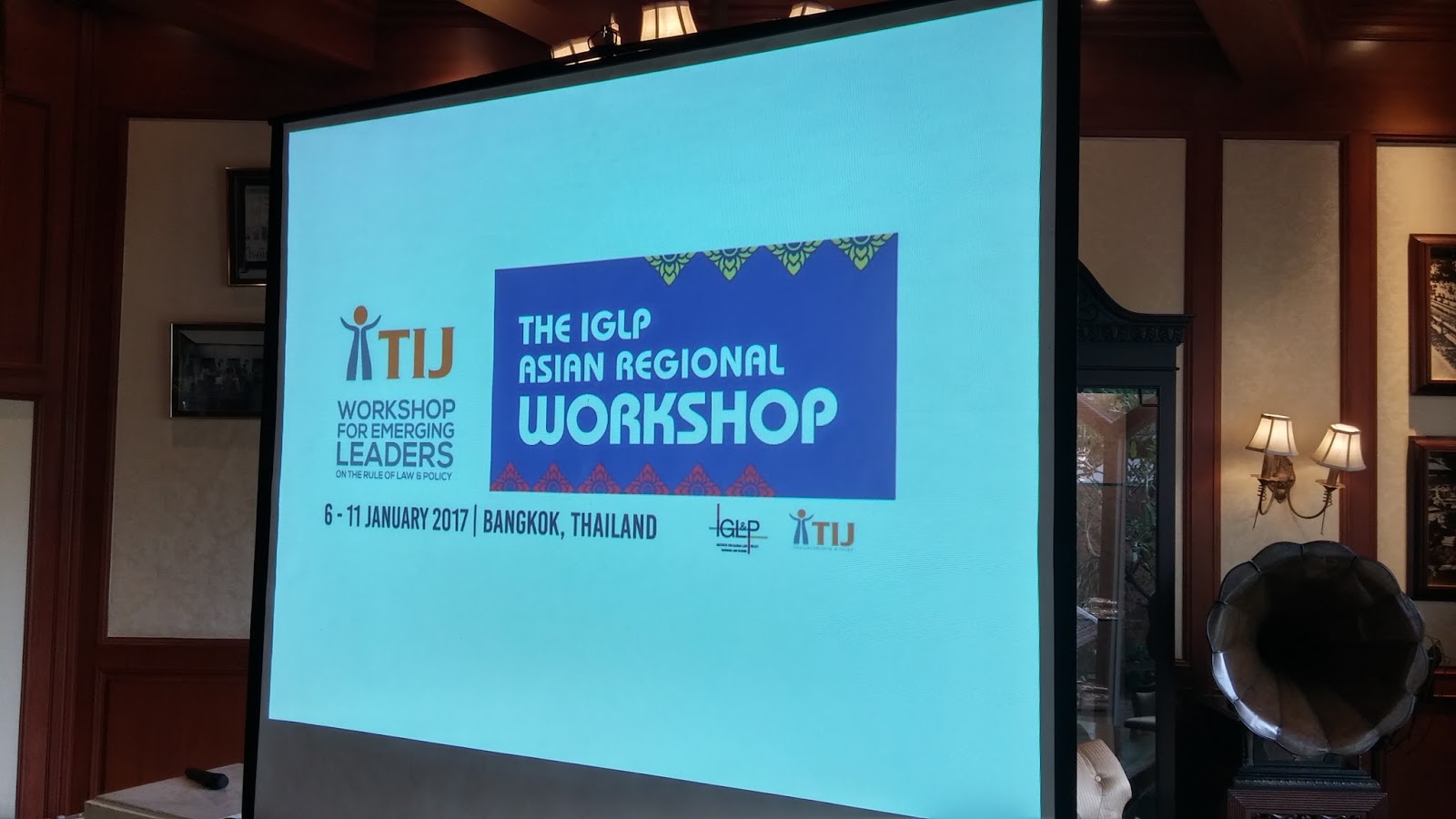
From 5-12 January 2017, the annual Institute for Global Law and Public Policy (IGLP), an initiative of Harvard Law School, forum converged on Thailand. The forum brings together young scholars and faculty from around the world for an intensive week of discussion and debate.

As part of the week, Melissa Crouch along with Dr Vanja Hamzic (SOAS, London) and Arm Tungnirun (Chulalongkorn University, Bangkok) convened a stream on ‘Law and Society in Southeast Asia’.

The stream content was based on classic works by Professor MB Hooker on Southeast Asian Law texts and David Engel on Legal Consciousness in Thailand, as well as recent research by Vanja on ‘Selfhood and Archipelago’ in Indonesia and the Monogamy Law and the family in Myanmar by Melissa. This provided a basis from which to reflect and engage with critical themes in the study of law and society in Southeast Asia: legal pluralism, law and religion; Buddhism and law, legal consciousness, concepts of selfhood, sexuality and gender.

Forthcoming Book: The Business of Transition

In 2017, a new book on The Business of Transition: Law Reform, Development and Economics in Myanmar, will be published with Cambridge University Press. The aim of this volume is to offer new empirical and comparative insights into the intersection between business, development and governance reforms in Myanmar. It brings together a range of leadings experts on Myanmar law, business and economics. The book offers critical perspectives on a range of contemporary issues that are at the cutting edge of business reforms in Myanmar as the newest market in Asia, including the establishment and prospects of Special Economic Zones; the emergence of social enterprise, labour law reforms, the importance of microfinance, the need for local economic governance, and changes to foreign direct investment.

This edited volume offers a close examination of the challenges and prospects of development in Myanmar, therefore contributing to the broader inter-disciplinary field of Asian Studies. It will also appeal to a broader law and development audience, offering a contemporary view of Myanmar from an empirical perspective but in light of the history and debates in the field of law and development more broadly. The volume will also be highly sought after by scholars, policymakers and practitioners because of its timely and thought-provoking insight into the current state of the law reform process in Myanmar in the business and commerce sector. The volume is the outcome of a workshop funded by the University of New South Wales in 2015.

Preface: Professor Martin Krygier

Chapter 1: Understanding the Business of Transition in Myanmar
Melissa Crouch

Chapter 2: Labour Standards and International Investment in Myanmar
Michele Ford, Michael Gillan and Htwe Htwe Thein

Chapter 3: The Extractive Industries Transparency Initiative in Myanmar: New Openings for Civil Society in Myanmar
Adam Simpson

Chapter 4: The Risky Business of Transformation: Social Enterprise in Myanmar’s Emerging Democracy
John Dale and David Kyle

Chapter 5: Microfinance and the Business of Transition
Sean Turnell

Chapter 6: The Governance of Local Business in Myanmar: Confronting the Legacies of Military Rule
Matthew Arnold

Chapter 7: Special Economic Zones: Gateway or Roadblock to Reform?
Josh Wood

Chapter 8: Facing the Concentrated Burden of Development: Local Responses to Myanmar’s Special Economic Zones
Lauren Nishimura

Chapter 9: Top-down Transitions and the Politics of Sanctions
Catherine Renshaw

Chapter 10: The Business of Aid in Myanmar

Tim Frewer

Islamist rule by law in Indonesia

This article first appeared in Policy Forum, 3 December 2016.


The great paradox of Indonesian democracy is on display for all the world to see.


On one hand, there is greater freedom of expression and association for all. But on the other, this has given fuel to Islamists to espouse lawlessness and violence in the absence of a strong state.


Today a major rally in Indonesia’s capital, Jakarta, was held to call for the arrest of Governor Basuki Tjahaja Purnama (‘Ahok’). A crowd of over 200,000 is expected, double the previous demonstrated on 4 November 2016. This crowd is to be matched by just 20,000 police and military personnel.


This is the second rally that has been held demanding his arrest in light of criminal investigations for blasphemy. The blasphemy case against Ahok has already been submitted by the Attorney General to the North Jakarta District Court.


In part, the case rests on a statement made by Ahok in which he referred to a verse of the Quran that is often used by Islamists as a reason why Muslims should not support non-Muslim politicians. Ahok himself is Christian.


While the next elections for governor are to be held in February 2017, the Attorney General’s Office has indicated that the case may proceed to trial quickly. Given that there may be several avenues for appeal, the case is still likely to stretch beyond this timeline.


In many ways the rally is inherent with contradictions and can be seen as an example of Islamist rule by law in Indonesia.


The call to demonstrate on 2 December was led by Munarman, infamous as a former human rights lawyer turned radical leader of the Islamic Defenders Front.


Munarman’s fall from the inner circles of human rights activists into the arms of Islamists is one of Indonesia’s greatest post-reform crises. He was a key leader in both Indonesian Legal Aid, known as ‘LBH’, and Kontras, a key human rights organisation.


Yet like many activists, Munarman appears to have become disillusioned with the post-reform struggle. In addition, he was perhaps deeply affected by the murder of Munir Said Thalib, a former high profile human rights activist and close colleague, poisoned by an agent of Indonesia’s National Intelligence Agency.


In 2002, Munarman became leader of the prominent Indonesian Legal Aid Institute Foundation in Jakarta. Yet in the years following, he seems to have shifted from support for the ideals of pluralism, democracy, religious freedom and the rule of law to publicly spouting highly intolerant views and open hostility to religious difference.


Munarman fell in with Hizbut Tahrir Indonesia, an Islamist organisation that calls for the creation of a worldwide Islamic state and is known for its conservative views. In 2006, this led to an internal move within YLBHI to oust him from leadership. Munarman turned his attention to exposing and denouncing so-called ‘deviant’ Islamic beliefs.


Around 2008, Munarman became involved in the Islamic Defenders Front, which is well-known for its willingness to use intimidation and violence against religious minorities. He was even involved in the infamous rally in 2008 that resulted in an attack on a National Alliance for the Freedom of Faith and Religion, known as the ‘Monas tragedy’.


Munarman was jailed for his involvement. Since being released from prison, Munarman has made a point of openly opposing the kinds of values human rights activists – epitomised in the work of organisations such as LBH and Kontras – have struggled so long for.


In many ways Munarman’s stance represents the great paradox of Indonesian democracy. Post-1998 democratisation has given greater voice to Islamic organisations who use their freedom to promote an Islamist agenda that claims to uphold the law. In fact, they subvert it.


In Ahok’s case, by demanding that the police have been too slow, Islamists put pressure on the police to hasten the process. By demanding that the Attorney General arrest Ahok, they are already presuming charges will be laid.


By a show of force in the capital, Islamists issue an implicit threat to the judiciary who may hear the case – we will mob your courtroom next. So much for a fair and impartial hearing. If the case goes to trial, Ahok will face a sentence of up to five years prison


This should lead to deeper questions regarding the relevance of the blasphemy law in post-reform Indonesia. For many years now, human rights activists have acknowledged the abuse of the blasphemy law, particularly against minority groups in Indonesia.


Yet efforts to reform the law have been unsuccessful. The government has suggested the introduction of a Law on Inter-religious Harmony, a key pillar of which would be a provision reformulating the crime of blasphemy.


While human rights activists initially rejected this overt effort by the state to regulate religion, there were some attempts made to work within this draft proposal. Rather than abolishing the blasphemy law, activists sought a middle ground by trying to reformulate the crime of blasphemy.


But these efforts are based on the assumption that blasphemy should be a criminal offence regulated by the state. It also assumes that law enforcement agencies can implement the law objectively.


Yet legal institutions in Indonesia are largely powerless against the increasing tide of Islamist rule by law. Lawyers and former champions of human rights such as Munarman are the driving force behind Islamist rule by law.

This is a rule by law that uses the instruments and institutions of the law in a way that is backed by violence, intimidation and coercion. It is in this respect that Islamist rule by law has become the greatest threat to the future of Indonesian democracy.